
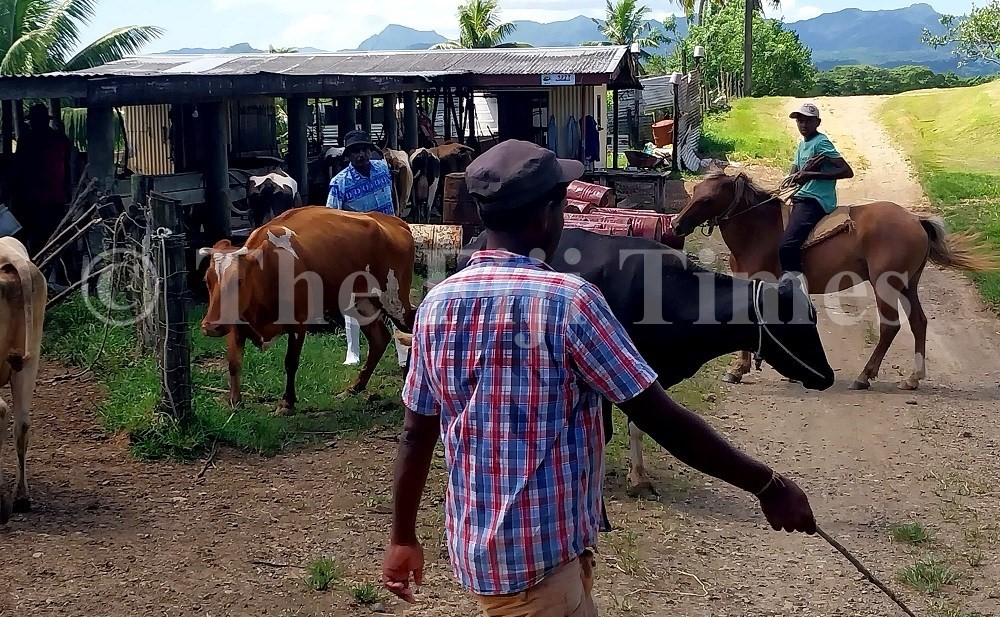
Fiji continues to take precautions to eliminate any outbreak of bovine tuberculosis (TB) and brucellosis, resulting in less than a 1 per cent infection rate on most farms.
Fiji Cooperative Dairy Company Ltd (FCDCL) CEO Kushmendra Prasad said the industry was a challenging one because it dealt with animals, and milk production stood to increase after rehabilitation programs for TB had taken place.
“Many bulk farmers are getting one or two numbers of TB, while they used to have numbers close to 100 animals,” Mr Prasad said.
“TB has moved away from the dairy industry; there is only less than 1 per cent TB infection rate in the dairy industry, according to the Ministry of Agriculture’s testing program. We are rest assured that funds that are going to be passed to the dairy farmers on the feed and other supplement feeding will quickly refix the production.”
Mr Prasad said the chance of an outbreak re-occuring was “very less” because the ministry and various committees tested farms every three months.
“The momentum of this is not lost. We are testing the farms. We request farmers, if your farm is not tested on time, please ask the Ministry of Agriculture, or ask the FCDCL to ensure you are tested on a timely basis and that you are safe.”
The focus now is also to improve the genetics of cattle breeds, which were affected by the disease outbreak.
He said the ministry was assisting the FCDCL to run artificial insemination programs and that farmers had complained about inbreeding because of bovine TB.
“Movement was restricted and because of the restriction, today the farms are less than 1 per cent (infection rate). We know farmers lost a lot of money because cattle were removed, and a lot of investment has gone.
“It is not that they’re not going to be compensated, slowly they are being compensated with the government’s aid. Farmers should be also aware that because of the disease, dairy could have collapsed if it was not mitigated. So, the ministry took the right approach at the right time to mitigate all this.”

