
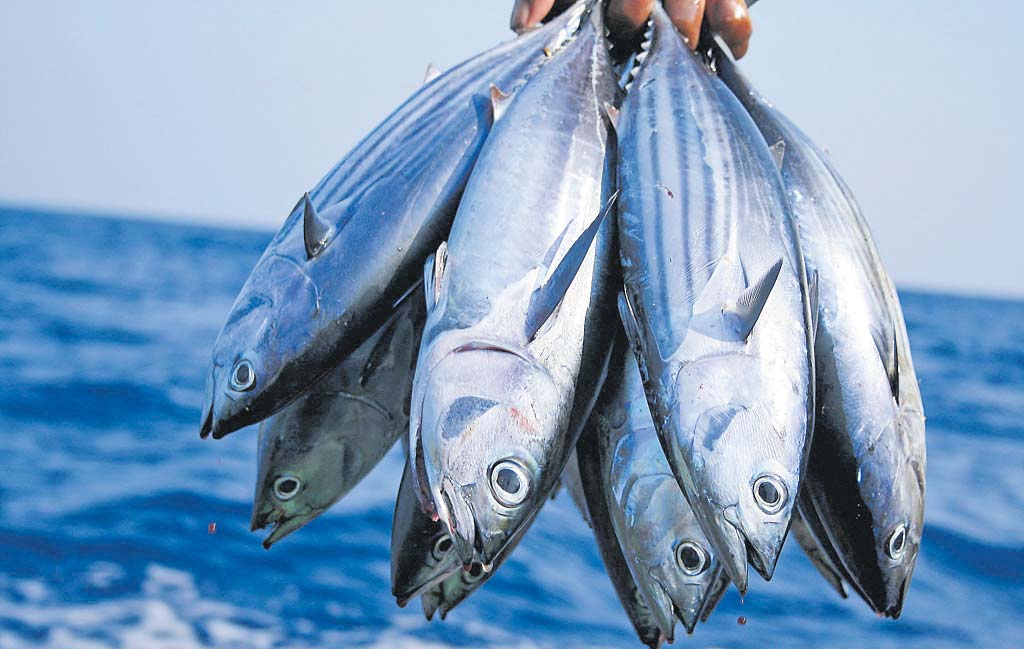
The Western and Central Pacific Ocean (WCPO) continues to dominate the global catch for albacore, bigeye, skipjack and yellowfin tunas, a recent report based on data from 2021 released by the Forum Fisheries Agency in Honiara, Solomon Islands has revealed.
The findings states between 53 per cent and 58 per cent of the global catch of these species has been taken in the WCPO over the past decade.
The 2021 total WCPO catch represents 53 per cent of the global production for these species with 5 million tonnes, the Indian Ocean at 24 per cent, Atlantic and Eastern Pacific Ocean respectively at 9 per cent and 14 per cent.
Data on Fiji
For Fiji specific data, the Economic and Development Indicators and Statistics – Tuna Fisheries of the Western and Central Pacific Ocean 2022 report presents the following information on catch and catch values.
The report states there was a catch of 6847 tons in 2021 in Fiji’s national waters through longline fishing.
This catch was worth $70 million.
Then there were the catch by a “national fleet.”
The report defines a national fleet as a domestically flagged and locally-based foreign charters.
The number of vessels registered under Fiji’s “national fleet” in Fiji in 2021 was 67.
The catch volume of these national fleet was 9816 tons in 2021 that was valued at $101 million.
The Forum Fisheries Agency estimates Fiji collected $4.3 million in license and access fee revenue in 2021.
Data on onshore processing volumes for 2021 is also presented in the report and refers to the volume processed only to longline and purse seine catch processed to some form domestically onshore or on-board vessels, excludes volumes transhipped or delivered directly to offshore canneries.
42,615 tons of fish was processed onshore in 2021 in Fiji, states the report.
The report says 3210 people were employed in the processing of the catch in 2021.
The report defines employment as those who harvest, process, ancillary services sectors, observers and government employees.
The highest exports of processed catch from in 2021 was to the United States valued at $157 million, followed by $21 million worth of export to Japan and $5.8 million worth of exports to Thailand.
Volumes processed at PAFCO
Fong Chun Formosa’s (FCF) acquired Bumble Bee in January 2020.
FCF being one of the three major players in tuna ensured continuity in terms of supply of tuna to Pacific Fishing Company (PAFCO) for processing.
The report states regional volumes processed or handled onshore has been increasing with a 20 per cent increase with annual volume of tuna processed or handled onshore in 2019, a further 19 per cent increase was seen in 2020 at an estimated 266,000 metric tonnes and this was the highest on record.
The large increases were attributed to the recent commencement of operations at the Sino Van fisheries plant in Vanuatu and at the Dayang Seafoods plant in Kosrae, Federated States of Micronesia.
“Another attributing factor is the change in ownership of PAFCO in Fiji from Bolton to FCF resulting in increased offloading of catches in Levuka by FCF vessels and increased production in 2020, states the report.
In 2021, total estimated annual volume of tuna processed was approximately 245,000 metric tonnes.
This was 8 per cent lower from the previous , but 65 per cent higher than was processed five years ago.
In 2021, the volume processed or handled onshore in FFA countries accounted for about 31 per cent of catch taken by national fleets within FFA waters, and 17 per cent of the total catch within FFA waters.
Around 48 per cent of the tuna processed or handled onshore in FFA members is processed in PNG while 17 per cent, 12 per cent, 4 per cent and18 per cent are processed in Fiji, Solomon Islands, Marshall Islands and other FFA member countries, respectively.
Processing of longline catch occurs largely in Fiji including loining and fresh/frozen sashimi and non-canned use value adding, states the report.
Employment
Total employment related to tuna fisheries in FFA member countries for 2021 is estimated at 26,735 an increase of 5 per cent from 2020 and 38 per cent since 2015.
In 2021, around 13 per cent of processing employment came from Solomon Islands and 10 per cent from Fiji.
The report states since 2010, there has been consistent growth in regional employment numbers with the onshore processing sector making the largest contribution of about 60-70 per cent.
In 2021, the total employment in the onshore processing sector was around 17,409, a 5 per cent increase from the previous year.
Employment in the harvest sector increased to 7119 in 2021.
The majority of those employed in the processing sector are employed in PNG, which accounts for about 73 per cent of all processing workers in 2021.
Employment in the processing sector is dominated, at least at the factory floor level, by female employees which make an estimated 64 per cent of the total workforce.
However, employment in the harvest and observer sector is dominated by males.
Exports to foreign markets
Fiji is the major exporter of tuna loins to the United States market and in 2021 between 68 per cent to 85 per cent loins arriving in the USA was from Fiji, states the report.
Currently, Fiji, Papua New Guinea, Samoa and Solomon Islands are the only suppliers with preferential access to the European Union markets.
In 2021, the regional value of EU imports from FFA member countries saw a marginal increase by merely 2 per cent to $284 million from the previous year despite the value of frozen tuna products declined by nearly 50 per cent.
This was offset by the increase in the value of loin imports and prepared/preserved tuna imports, 8 per cent and 3 per cent respectively.
Canned tuna and loins have been the principal EU imports from FFA member countries although there have been minimal imports of fresh and frozen tuna products.
In contrast, the value of US imports from FFA member countries declined by 17 per cent to $84 million in 2021 from the previous year.
This was primarily associated with a significant decline in loins and prepared or preserved products by 27 per cent and 79 per cent respectively, although tuna fresh and frozen imports increased by 32 per cent to $15 million and by 51 per cent to $6 million respectively.
“Since the last decade, tuna trade with the US is presently dominated by tuna loins at between 68 per cent to 85 per cent of annual totals with Fiji as the principal supplier. Prospects for canned tuna trade to the US market is limited under present tariff protections accorded to domestic processors,” states the report.
The sashimi/ non-canned exports to the US consist mainly of fresh/ frozen albacore, bigeye and yellowfin and value-added tuna products.
“Since the COVID-19 pandemic in 2020 which saw a significant decline of nearly 40 per cent of fresh imports, there has been a consistent growth in the value of both fresh and frozen imports in the following year with Fiji the main supplier.”

