
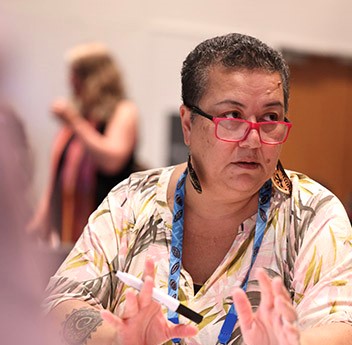
Sexist is how Noelene Nabulivou of Diverse Voices and Action (DIVA) for Equality in Fiji summed up women’s participation in politics during a questions and answers (Q&A) session on reimagining democracy at the University of the South Pacific this week.
Ms Nabulivou stressed women were neither represented proportionately in governance nor on the panel at the event.
In response, Deputy Prime Minister and People’s Alliance deputy leader Manoa Kamikamica said that in the last election, PA had fielded some of the best women candidates, but this did not materialise into votes. “I don’t know what had happened,” he said, adding that maybe it was because politics was such a male-dominated field. “Perhaps we need to look at laws relating to women’s participation, it is something that needs to be discussed.”
Labour leader Mahendra Chaudhry said the disparity had a lot to do with the current electoral system.
“There is an emphasis on the party leader, and you don’t get the best people in Parliament in the process,” he said.
“I think we need to get back to constituency-based representation — single and multi-member — because people want to identify themselves with their own MPs.
“At the moment, it is wide open. No one knows which MP represents them. I think we need to look at that so that we have fair representation across the country.”
Similar sentiments were echoed by SODELPA general secretary Viliame Takayawa, who said the party had 11 women participants in the last election and was planning to have at least 20.
Mr Takayawa said this was a fundamental issue, adding the issue of subservience to men was at times ingrained that women felt reluctant to participate in the political sphere.
National Federation Party leader and Deputy Prime Minister Professor Biman Prasad also agreed with the complexities of getting more women into the political space. He said the onus had to start with political parties to bring in more women to party positions.
Prof Prasad said NFP had a woman general secretary and two women vice-presidents, and two of the five elected MPs are women, which made for 40 per cent representation from the party.
However, Prof Prasad also said it would be better if the 40 per cent representation was across the board in Parliament.

