
In 1992 a lot of things unfolded in Fiji’s political sphere, like the first national general election since the military coups of 1987 was held.
It was also in June of 1992 that the new Parliament complex was opened in Veiuto. This allowed 69 members of the House to take their oath of allegiance.
Absent on the day was the National Federation Party’s James Raman who was out of the country.
The Fiji Times on June 27, 1992 reported that the House of Representative had met for the first time in five years that day.
It was reported that the first Parliament meeting would assemble on Monday June 29, 1992 and it was to have the President, Ratu Sir Penaia Ganilau address the House.
The new complex in Veiuto had indigenous design when it opened.
With Fiji being known for its many traditional artistry, it was vital for the new complex to have a little representation of the beautiful works that local artisans were renowned for.
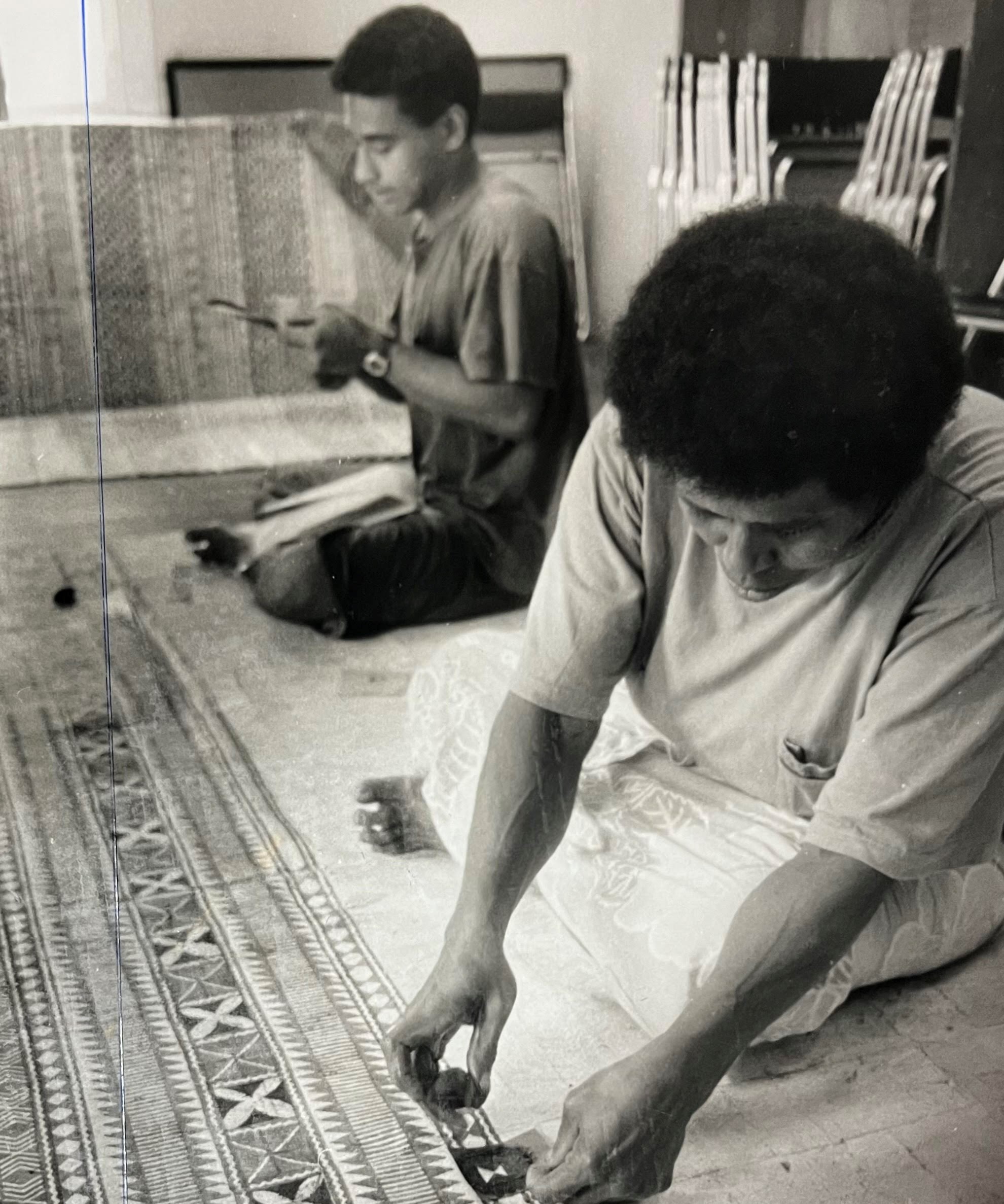
Traditional craftspeople from Somosomo, Vatulele, the Lau Group and the Soqosoqo Vakamarama were brought together to prepare traditional décor for the complex.
This newspaper reported that the Fiji Arts Council assisted the craftsmen who had been working at the council headquarters on Gorrie St, Suva –allowing the work to flow better.
The Vatulele people who added their unique masi décor even completed a piece of masi that measured 8.53m by 3.65m.
It took three people six weeks to complete (from the time the masi was beaten and dried to the stenciling of patterns) it.
Also the craftsmen from Kabara worked on the magimagi for the new complex which was often admired when shown in parliamentary pictures and videos.
Since the opening of the new parliament complex many sessions were held there.
A significant one was the introduction of the 1997 constitution. On July 4, 1997 this newspaper reported that the House of Representatives had passed the 1997 Constitution at Parliament.
The House of Representatives had unanimously voted for the 1997 Constitution (Amendment) Bill after two weeks of debate.
Sixty seven members that were present had all said ‘aye’ during the division period which was to help the Speaker Dr Apenisa Kurisaqila determine whether the two-thirds majority vote stipulated in the 1990 Constitution was reached.
The 1997 Constitution according to Fijian History was written by a commission composed of Sir Paul Reeves, the then Governor-General of New Zealand, businessman and former politician Tomasi Vakatora and historian Dr Brij Lal.
In 1999, according to Fijian History, Fiji Labour Party’s Mahendra Chaudhry became Fiji’s first elected-Indo Fijian Prime Minister to lead Parliament.
His role as Prime Minister was short-lived when George Speight in 2000 entered Parliament on May 19 and held Mr Chaudhry hostage for 56 days. Speight was later arrested and Parliament was restored.
In 2001 Laisenia Qarase was elected as Prime Minister but in May of 2006 his government had a narrow victory in the general election.
In 2006 Voreqe Bainimarama took control of government and later became Prime Minister of Fiji. Following the establishment of a new constitution in 2013, elections according to the Parliament of the Republic of Fiji was held in September 2014 to select Members for a new Parliament.
The return to parliamentary democracy in 2014 saw the Parliament return to its original site at Government Buildings.
The new Parliament first convened on October 6, 2014 at the current Parliament within Government Buildings in Suva.
The Parliament of the Republic of Fiji according to Parliament is a unicameral legislature comprising of 55 members elected by an open-list proportional representation in one multi-member nationwide constituency.

