
In an unprecedented move, Parliament in March, unanimously supported Deputy Prime Minister and Minister for External Trade Manoa Kamikamica’s motion for the August House to support the Pacific Forum “leaders’ desire to secure our Pacific Ocean’s future and condemn any action that would threaten it.”
Particular attention was paid to Japan’s plan to release nuclear wastewater into the Pacific.
Pacific stance
For the record, Fiji’s stance — and that of the Pacific as a collective — was voiced in 2020, before Japan made its plans known.
A statement from the Pacific Islands Forum said as States Parties to the South Pacific Nuclear Free Zone Treaty (Treaty of Rarotonga), “recalled concerns about the environmental impact of the Fukushima Daiichi Nuclear Reactor accident in 2011 and urged Japan to take all steps necessary to address any potential harm to the Pacific”.
They “called on States to take all appropriate measures within their territory, jurisdiction or control to prevent significant transboundary harm to the territory of another state, as required under international law”.
The statement said those important statements stemmed from key international legal rules and principles, including the unique obligation placed by the Rarotonga Treaty on Pacific states to “Prevent Dumping” (Article 7), in view of our nuclear testing legacy and its permanent impacts on our peoples’ health, environment and human rights.
“Pacific states therefore have a legal obligation ‘to prevent the dumping of radioactive wastes and other radioactive matter by anyone’ and ‘not to take any action to assist or encourage the dumping by anyone of radioactive wastes and other radioactive matter at sea anywhere within the South Pacific Nuclear Free Zone’.”
Release to go ahead
However, despite the Pacific Islands Forum’s expressed concerns for the significance of the potential threat of nuclear contamination to the health and security of the Blue Pacific, Japan is set to start the disposal of treated radioactive water into the Pacific Ocean following approval from the United Nations’ nuclear watchdog, the International Atomic Energy Agency (IAEA).
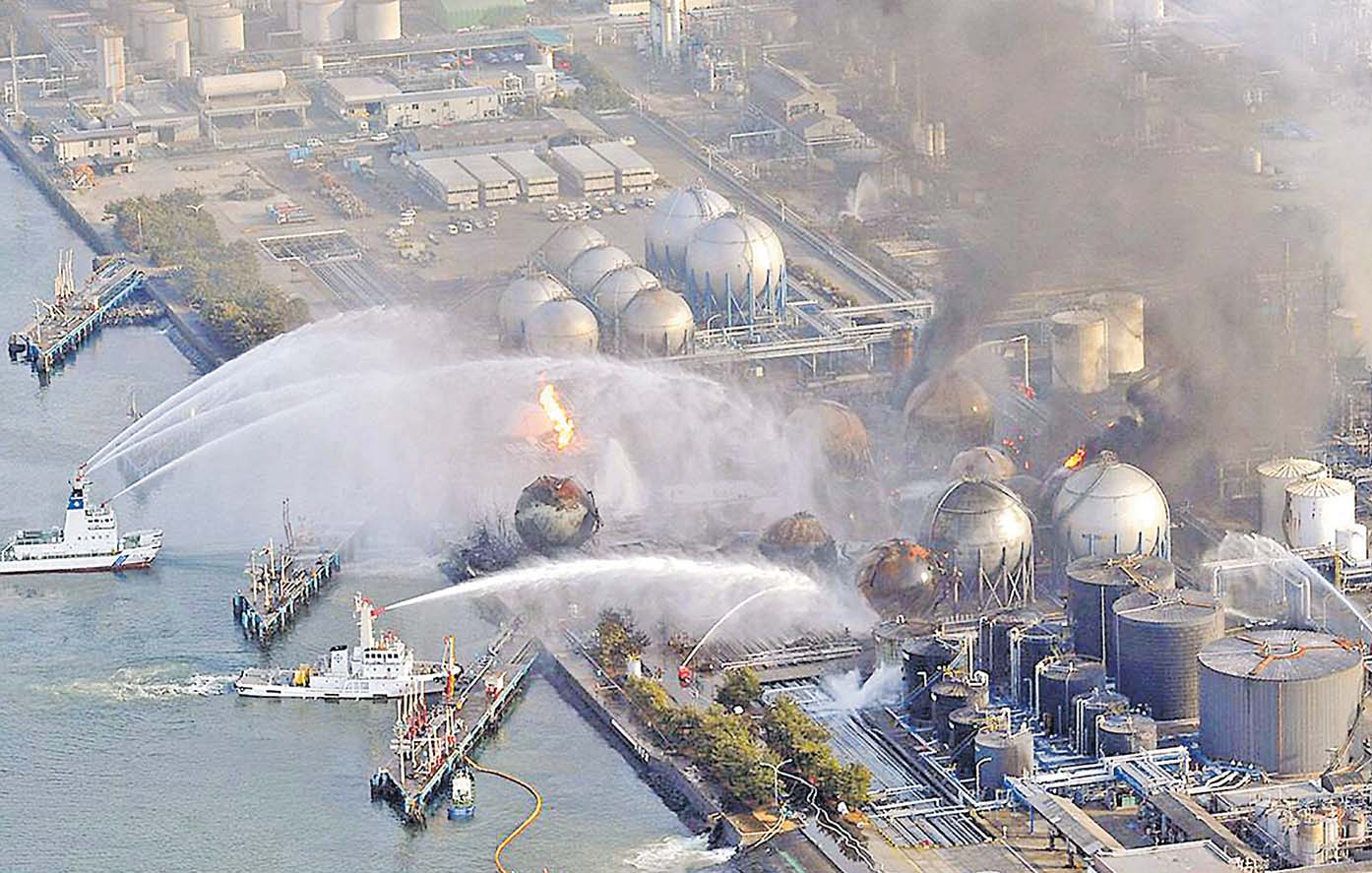
The widely condemned plan of action will see Japan dump more than a million tonnes of “treated” radioactive wastewater used to cool the Fukushima Daiichi nuclear power station, damaged by an earthquake 12 years ago.
As reported widely, the plan to gradually discharge the nuclear wastewater has deeply divided nations and scientists. Specific concerns by the Pacific Forum on nuclear contamination issues are not new.
It has for many years dealt with attempts by other states to dump nuclear waste into the Pacific. It joined a chorus of leaders who urged Japan and other shipping states “to store or dump their nuclear waste in their home countries rather than storing or dumping them in the Pacific”.
The Forum also pointed out that in 1985, it welcomed the then Japanese PM’s statement that “Japan had no intention of dumping radioactive waste in the Pacific Ocean in disregard of the concern expressed by the communities of the region”.
“Against this regional context, Forum engagement on the present unprecedented issue signifies that for our Blue Pacific, this is not merely a nuclear safety issue.
“It is rather a nuclear legacy issue, an ocean, fisheries, environment, biodiversity, climate change, and health issue with the future of our children and future generations at stake. “Our people do not have anything to gain from Japan’s plan but have much at risk for generations to come.”
Should we be worried?
Over 1.3 million tonnes of nuclear wastewater has been collected since the accident to the Fukushima plant. Japan says it has run out of storage space and has no other choice but to release the wastewater into the Pacific.
According to the plan, this incremental release will be done over three years. Japan claims that the wastewater, containing a radioactive isotope called tritium and possibly other radioactive traces, will be safe.
A few weeks ago Chinese ambassador to Fiji Zhou Jian condemned both Japan’s plan to release nuclearcontaminated wastewater into the Pacific, and their Western allies for being silent on this serious matter.
He said Japan must and can find storage space within its own country and should not treat the Pacific as its “sewer”. He also said if the Japanese thought the water was safe, it should use it as drinking water.
He called on Fijians to speak up as experts had labelled it a trans-boundary and trans-generational event that was a threat to marine life and cause harm to humans. This week, the Chinese Foreign Ministry issued a statement in response to IAEA’s report Japan’s plan’s complied with international safety standards. The IAEA said it would conduct long-term monitoring over Japan’s discharge activities.
China’s position
It said it learned the report failed to fully reflect views from experts that participated in the review.
“The conclusion was not shared by all experts,” it said in a statement.
“We believe that the IAEA report should not be the “shield” or “greenlight” for Japan’s discharge of nuclear-contaminated water into the ocean. Due to its limited mandate, the IAEA failed to review the justification and legitimacy of Japan’s ocean discharge plan, assess the long-term effectiveness of Japan’s purification facility and corroborate the authenticity and accuracy of Japan’s nuclear-contaminated water data” China said it noted that director general Rafael Mariano Grossi stated the IAEA conducted the review at the request of the Japanese Government and the report was “neither a recommendation nor an endorsement of Japan’s ocean discharge policy”.
It said the discharge was planned as a cost saving measure for Japan, and in total disregard for concerns and opposition from the international community.
The statement said the IAEA report failed to answer whether “Japan’s purification facility be effective in the long-term, and whether the international community will be timely informed when the discharged water exceeded the discharge limit.
It also did not say what impact would the long-term accumulation and concentration of radionuclides bring to the marine environment, food safety and people’s health.
“Twelve years ago, Japan received support from all over the world in the wake of the Fukushima nuclear accident. Twelve years on, Japan has chosen to shift the risk of nuclear contamination onto the whole of humanity.
The United Nations Convention on the Law of the Sea (UNCLOS) stipulates that States have the obligation to protect and preserve the marine environment, and the Convention on the Prevention of Marine Pollution by Dumping of Wastes and Other Matter in 1972 prohibits the dumping of all radioactive wastes into the ocean from man-made structures at sea.
“What Japan does contravenes its international moral responsibility and obligations under international law.
“We once again urge the Japanese side to stop its ocean discharge plan, and earnestly dispose of the nuclearcontaminated water in a science-based, safe and transparent manner.
“If Japan insists on going ahead with the plan, it will have to bear all the consequences arising from this. We urge the Japanese side to work with the IAEA to put in place as soon as possible a long-term international monitoring mechanism that would involve stakeholders including Japan’s neighbouring countries.”

