
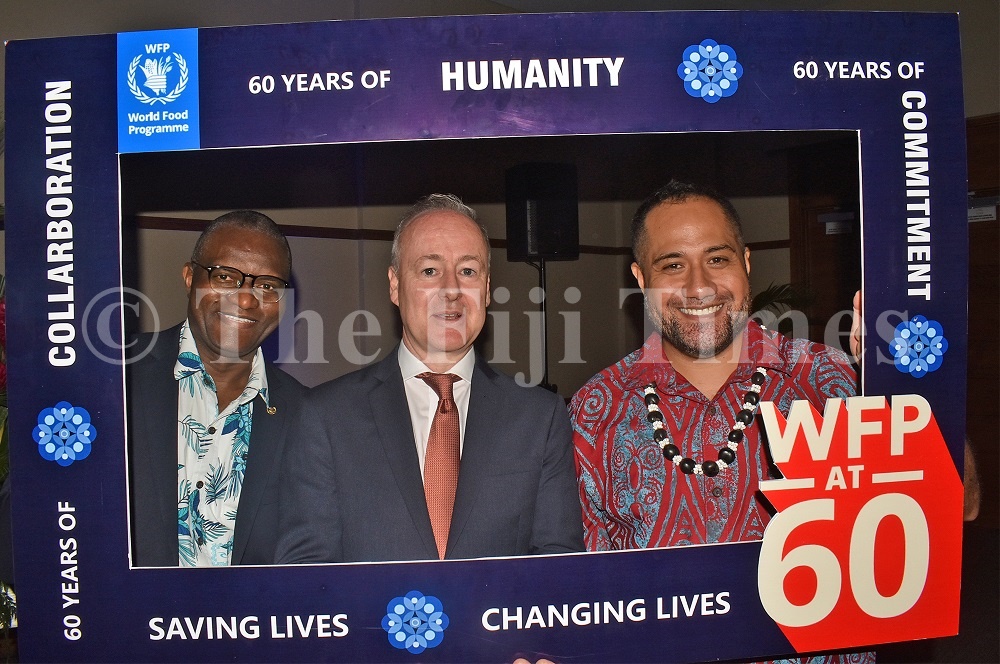
The world is facing a hunger crisis of unprecedented proportions, the largest in modern history, says World Food Program director Asia-Pacific John Aylieff.
During the launch of WFP’s 2022 Annual Country Report in Suva on Friday, he said over 300 million people in the world faced acute, life-threatening hunger.
“It’s already staggering that 800 million people on our planet don’t know where their next meal is coming from,” Mr Aylieff said.
“It’s terrifying that in our world today, over 300 million face acute, life-threatening hunger.
“The pandemic, trade disruptions, economic stimulus and the conflict in Ukraine have created a perfect storm, driving up food prices to unprecedented levels.”
Mr Aylieff said this global food crisis we are witnessing, he believed, was the defining crisis of our era.
“How we come together to tackle it, is how future generations will remember us and judge us.”
He said to help tackle the problem, WFP opened its office in the Pacific in 2015.
“We did so, with encouragement from the governments of Fiji, Australia, New Zealand and the USA.
“We did so because there was a strong demand from Pacific Island Countries and Territories for WFP to leverage our core strengths in logistics, emergency telecommunications, food security and disaster risk management with the distinct aim of strengthening national and regional capacities to prepare for, and respond to, disasters.
“In the Pacific, WFP plays a very different role to the one it plays elsewhere in the world.
In the Pacific, WFP does not directly deliver food and cash in the aftermath of a disaster, rather, we support sovereign nations to feed their people, to deliver national responses through national systems, which we have helped to strengthen.”

