
A museum can leave a charming impact on those who visit one, whether they be children, youths or adults. It is literally its own library, a treasure trove of information on the past.
I remember that during a certain school holiday, back when we had the Hibiscus Festival, the museum hosted a holiday program.
So I begged my mother to take me to the Fiji Museum. I was barely 10-yearsold but had a keen passion for history.
The museum was simple, full and I was in awe of how amazing the program was. I got to watch and do pottery making, visited the Bilo Battery Gun site and even attended a picnic on Mosquito Island, in Lami Bay.
Six years later, I revisited the museum after an international trip, and I valued the reflections I made, more so on the girmit section.
However, it wasn’t until the girmit section was newly inaugurated last month, by India’s Minister for External Affairs, Dr Subrahmanyam Jaishankar, that I set foot on the renovated space and felt as if I was in a time capsule.
Today, the new, modern and vibrant exhibition space focuses on Fiji’s Girmit story – Girmit: The Agreement, A Story of the Fiji-Indian Experience .
It has about 63 items on display. Museum acting director Dr Katrina Igglesden said it took four to six weeks to complete the space with a funding of $35,000 from the Government of India.
While the museum had not collected anything new, they had several donations and purchased items to complement the 19th century collections.
The girmit section did look very different from the previous setup.
Now, while some may assume that everyday is the same in a museum, Dr Igglesden stated that each day was different. She had worked with the Fiji Museum on and off for about 15 years, and her professional life had been within the museum scene for the last 20 years.
“I planned psychology as my undergrad degree and then when I was at university I thought I was going to be like a forensic anthropologist.”
While in Vancouver, where there is a large Fijian community, a curator from the Museum of Anthropology approached her with an opportunity to work with a large Fijian collection.
The curator informed her that nobody young knew anything about the collection and suggested that she learnt about it.
Hooked on with the work, her interest has stuck with her till this day and she cannot imagine having any other job.
“If you’re preparing exhibitions, it’s very different from working on educational outreach materials but a lot of it, for me especially, involves caring for the collections and making sure they are kept, cared for and displayed in the best way possible,” she said.
“It’s about guardianship and caring for everybody’s cultural heritage because everything in a museum belongs to the communities around it.”
Dr Igglesden said a completely different project that the museum was working on was the US Government-funded collections inventory project.
“Through this project, for the first time ever in the museum’s history, we are systematically documenting every single object that is in the collection.
“We’ve got accession registers, which just means that we have books that state when things came into the museum, when they were donated and when they were presented.”
Dr Igglesden explained that they were going through the registers, corresponding with the objects and properly documenting everything in the museum.
“There are over 10,000 objects altogether in the collection; there’s over 3000 photographs, over 3500 archival documents and all of that will come together in the next four and half years, so it’s a big job.
“I think a lot of people don’t realise that Fiji Museum itself holds the best collection of indigenous Fijian materials in the world.”
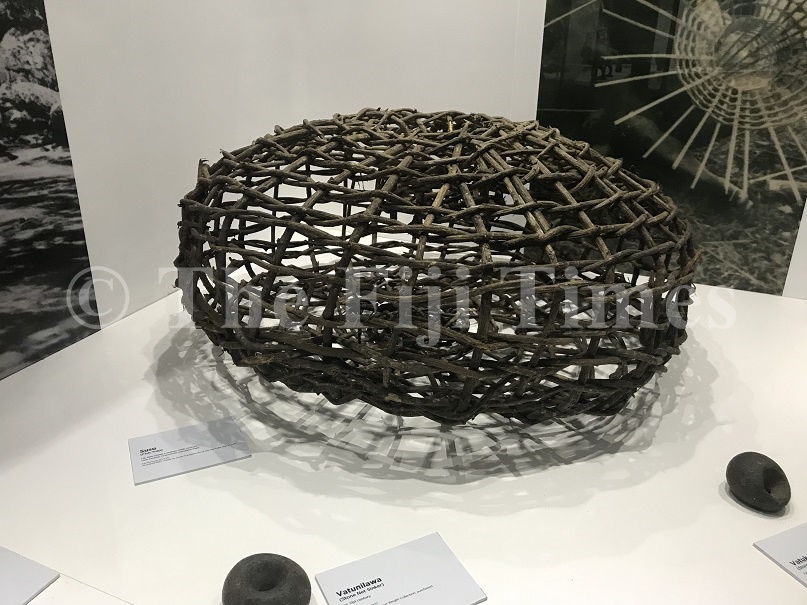
The ‘Voyages’ exhibition, for instance, which had 80 objects before, now has over 250 objects on display.
“Overseas museums have really good little pockets of collections often from a colonial governor or administrator but the collection here is extremely well rounded and therefore the most rich that exists in the world.”
Since the new museum exhibition opened, Dr Igglesden was impressed with visits from families during the school holidays, December through to January.
“Repeat visitors are also coming back as well and we get a lot of comments that they didn’t just come once, they came a second time or a third time and brought new family members with them.”
Dr Igglesden said the team was not only doing work within the museum but have moved out with their recent three-day archaeology site protection workshop with youths earlier this month.
This was the first community outreach program for the Fiji Museum to be held outside of Viti Levu in Bagata Village, Wailevu, Cakaudrove.

