
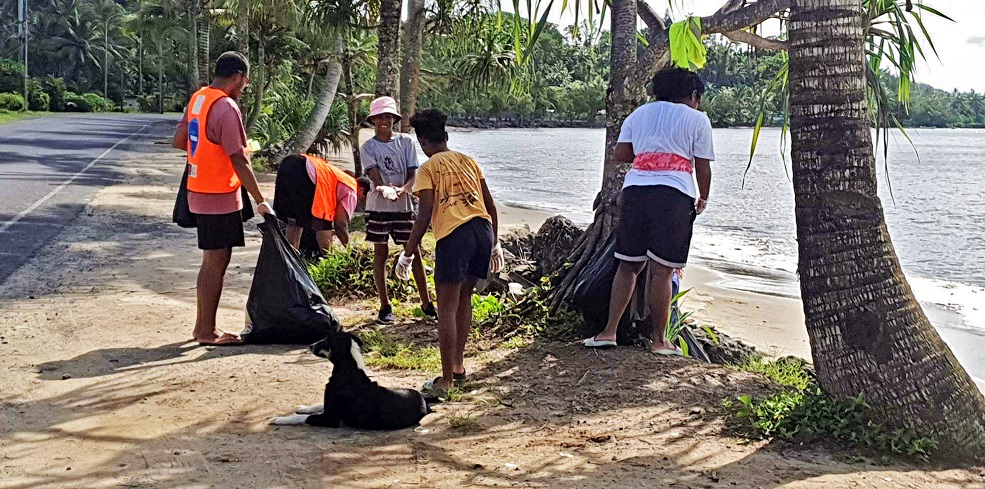
Romulo Nayacalevu of Wainiyabia Village, located along the Queens Road just outside of Pacific Harbour is urging people who use the beach to clean up after they enjoyed themselves.
His concerns follows the indiscriminate and irresponsible dumping of trash along the beach and highway near his village home of Serua.
“This nation has a big problem with littering,” Mr Nayacalevu said.
“With people not having a sense of national pride, we’ve got a problem of people not caring about where to put their rubbish. “This issue is a serious problem and if that means we need to talk about this at home, in schools, in churches, then we need to do it and do it soon.
“The rubbish problem in Fiji is shameful and getting out of control.
“Everywhere you go there’s rubbish.” As for the beach in front of his village, Mr Nayacalevu said littering was done by almost everyone who used the beach.
“The laws recognise it as a public beach but the fact is that this is our qoliqoli, our traditional waterfront.
“And by good grace over the years, it has been open to the people of Fiji to come and enjoy the sea but the disappointing thing is people tend to leave their rubbish when they leave.
“It’s an eyesore and it’s a filthy habit.
“There’s always the danger of disease from the rubbish that are left behind — used diapers, food scraps and broken alcohol bottles.
“It contributes to the degradation of the environment, makes the place unhealthy and gives the village a very bad image.”
Recently villagers organised a Coast Care Program to clean up the Christmas and New Year mess left behind by people who had used their traditional qoliqoli. “We had to look for rubbish bags to collect all the rubbish that was left behind, the villagers had to organise a rubbish truck to pick up all the garbage bags after the cleanup.
“The good thing is everybody came with a spirit of goodwill and the update was they wanted to continue picking up rubbish along the highway.
“Someone had suggested that we put rubbish bins near the beach.
“My answer to that was “no we don’t need to put up rubbish bins because then we will have to get the rubbish trucks to come and collect them”.
“For villagers in our area we have to have our own rubbish disposal.
“We dig up a pit and bury it because there’s no access from the town councils to collect the rubbish.”
He said facilities available for public use required a fee because the idea was someone had to look after it and provide for its upkeep.
“If you go to Albert Park and want to use the toilets you have to pay for it.
“Our beachfront is also considered public but while traditional landowners have access to their traditional land space the sea, the beachfront unfortunately belongs to the State, so it is important that the State regulates the laws so that it is not an unnecessary burden to the villagers.
“The other alternative is if that’s not going to happen then villagers are empowered to charge a fee so that cleaning can be done after — but again that’s the notion of ‘it’s a public place and do you need to charge fees for the use of public facilities’.
“We don’t want to go there because it’s not about making money but if you live in the village it’s frustrating watching visitors come and enjoy themselves, and when they leave, the villagers will have to come and clean up their mess.”
He said the more the beach was polluted the more risk it posed for injury and sickness.
“We are very concerned about cleanliness.
“When I tweeted about this issue, another young man who lives with his family down in Vunimaqo Village responded, saying that the rubbish from the beach was carried by sea down to his village.
“Now I don’t know the extent of this rubbish movement along the sea but the clean-up we had done stretched all the way down to Galoa.”
Mr Nayacalevu said for a country that promoted the beach, sand and sea as a tourist attraction — the way Fijians took care of their environment left a lot to be desired.
“The villagers also use the sea for swimming and we get our food sources from the ocean.
“My parents have morning walks on the beach, for exercise and quiet enjoyment. “But like I said, even if the law doesn’t formerly recognise it as our traditional qoliqoli, that is our traditional qoliqoli.
“That sea has sustained our generations for years
“The public have access to it and the least they should do is take back with them their rubbish after using our beaches.
“Just take your rubbish with you, “In my mind I try to think of the mentality of those who use the beach.
“Do they just throw their rubbish after they eat in their kitchen, bathrooms or around their homes?
“Well, if it’s their own home that’s Ok but it does not justify the littering of someone else’s compound or property.
“And I think a little respect goes a long way, not only for the beaches but for the public and especially the villagers.”
He called on the new coalition Government to strengthen the environment and littering laws already in place.
“I know there are a 101 priorities and urgent things to be attended to but the environment should be right up there.
“We’re not just talking about the environment for the sake of beautification and the health of our people, we’re also talking about the context of climate change and hygiene.
“We’re there at COP meetings banging tables and telling the world this is what’s happening to us.
“But everything must start from home, from Jerusalem, and our Jerusalem is our country and unless we learn to clean up our homes and communities we’re losing the battle against littering. For Mr Nayacalevu, living in his village, close to the beach, is what he loves and it’s upsetting to see visitors coming in and dispose of their rubbish carelessly.
“I hope in the life of this Government or any other government that they will prioritise this.
“This is not a political issue, this is an issue of not just the environment but of life and death itself.
“If we pollute the beach, it goes into the water and it pollutes the marine life and ultimately it affects us the consumers.”
He said that the laws in place needed to be implemented and resourced.
“We’ve got the Ministry of Environment, we’ve got structures but we need to implement and do it effectively.
“You can have all the good laws under the sun but if you don’t resource and implement then they are as bad as the paper it is written on.”
• Questions sent to the Ministry of Environment remained unanswered when this edition went to press.

