
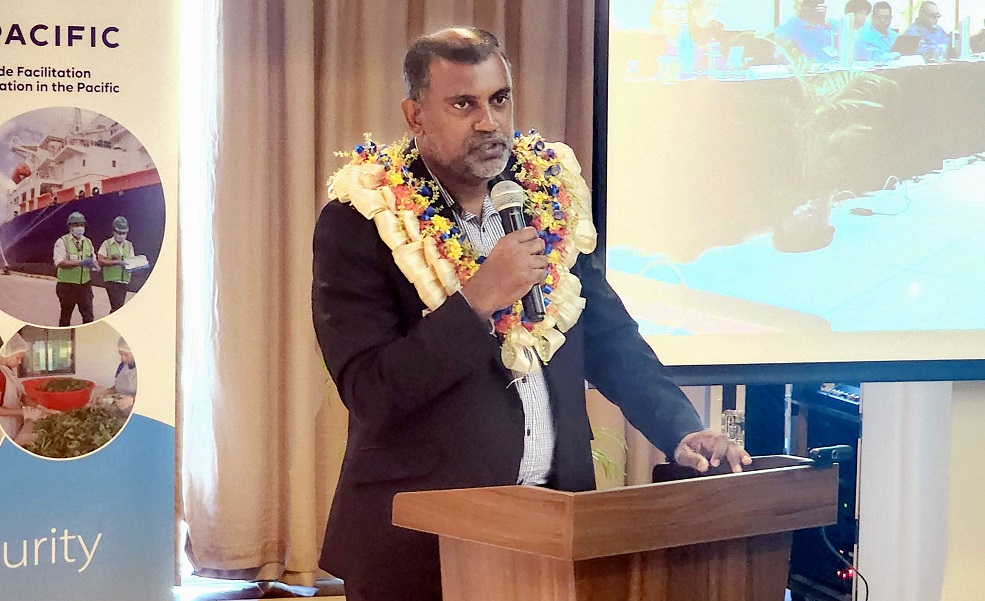
Producing quality phytosanitary measures continues to be an ongoing battle, says chairman for Biosecurity Authority of Fiji Naushad Ali.
Giving his address last Monday at the official opening of the three-day regional workshop to review draft International Standards for Phytosanitary Measures (ISPMs), Mr Ali said as a region, Pacific Island countries must continue working together and protecting the region from biosecurity risks that linger at the horizon.
Mr Ali said in this day and age, international travel after COVID lockdowns and trade was at a greater pace than ever before.
“And as travellers and commodities move around the world, organisms that present risks to plants also travel with them.
“New pest incursions and pest outbreaks cost governments, farmers and consumers billions of dollars every year.
“Once invasive pest species are established in a nation, eradication is often impossible and controlling and managing them takes up a significant resources and time.
“Due to the impact of climate change, plant pests that ravage economically important crops are becoming more destructive and posing an increasing threat to food security and the environment. “Food and Agriculture Organization estimates that annually up to 40 per cent of global crop production is lost to pests.
“Each year, plant diseases cost the global economy over $220 billion and invasive insects at least $70 billion.
“The population in the world is currently growing at a rate of around 1.14 per cent each year and global demand for food is expected to be doubled by 2050, so will be the pressure on production.”
Mr Ali said food security was threatened by an alarming increase in the number of outbreaks of transboundary pests and diseases of plants.
“This reinforces the importance of international cooperation through the International Plant Protection Convention.”

