
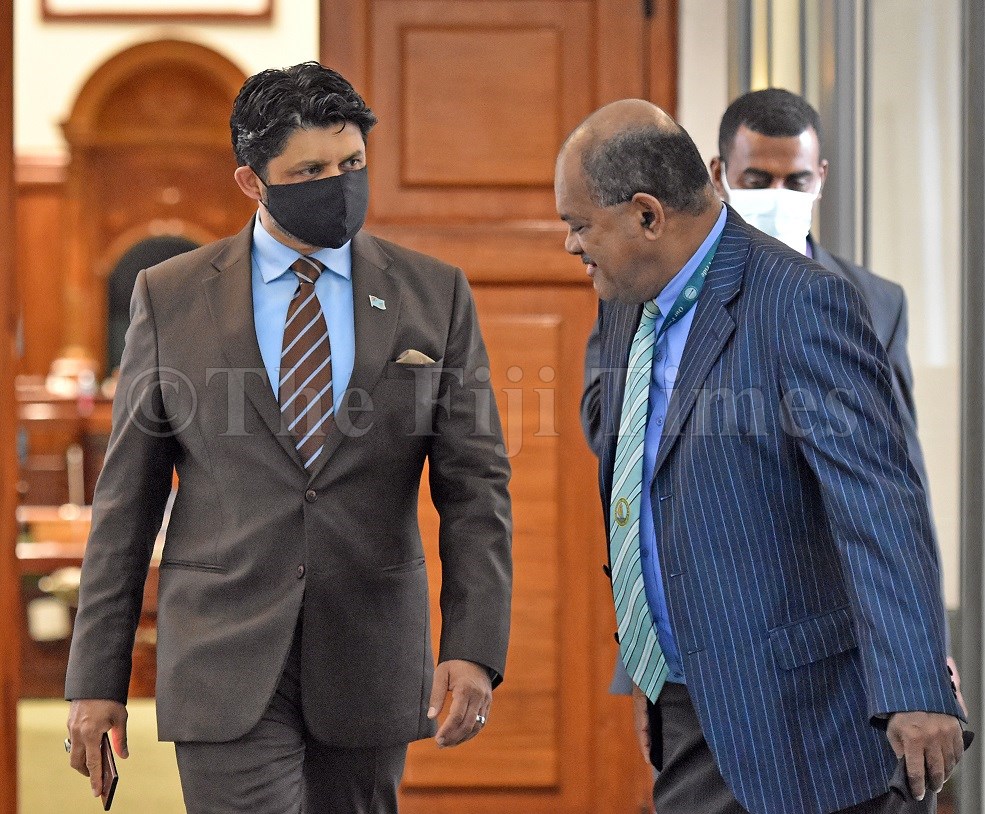
Even though the nominal value of Fiji’s debt had increased from $2.8 billion in 2016 to $5.7 billion at the end of 2019 before the COVID pandemic, its debt to GDP ratio had declined from 53.3 per cent to 48 per cent, says Acting Prime Minister Aiyaz Sayed-Khaiyum.
Mr Sayed-Khaiyum said the debt to GDP had declined because Fiji’s nominal GDP grew much faster.
“If the value of GDP goes up, then obviously a debt to GDP will come down, and this is the result of the nine years of consecutive growth,” he said.
“They (Opposition) go on about the 3 per cent growth … but that’s a fact our GDP’s nominal value grew from $5.3 billion to $11.8 billion in the same period.
“That’s a phenomenal rate of growth. Tax revenue fell by 50 per cent on average every month, we lost almost $1.4 billion in 12 months in tax revenues, so in two years we lost $2.8 billion in tax revenue, that’s a fact.
“During the same period, we had other new non-inflows like budget support grants and divestment receipts.
“However, to maintain public expenditure at around $3.7 billion, which includes $500 million provided unemployment benefit, and other support measures, Government had to borrow $2 billion in the last two financial years. Now this is where the Opposition is saying that we should not have borrowed this, so basically, if we had not borrowed and our revenues had shot down, and our GDP had gone down, that means we should cut expenditure by $2 billion.”
He said this would have been disastrous.

