
Now that we are into the cyclone season, perhaps it is apt to remind ourselves about safety.
We have been warned to expect up to three tropical cyclones from November, 2021 to April, 2022.
The weather office has warned one of these systems could be a severe system.
The Fiji Meteorological Service made the observation in its 2021/22 Tropical Cyclone outlook released last month.
The Western Division, it said, could face an “elevated risk”.
It seems we will have to prepare ourselves for average tropical cyclone activity for Fiji, with one to three tropical cyclones likely to pass through our exclusive economic zone.
An analysis of past cyclone tracks showed that a greater number of tropical cyclones which affected Fiji in seasons similar to the present, passed through the Western Division.
“Hence, there is an elevated risk of tropical cyclone activity in the Western Division. Similarly, TCs also affected other parts of Fiji in seasons similar to present in the past. Therefore, all parts of Fiji should be equally prepared for the coming tropical cyclone season,” it stated.
In the face of that outlook, four to six tropical cyclones are expected between November, 2021 to April, 2022 in the region.
Natural disasters are not something new for Fiji.
They have not just come out of the woodworks.
They have been part of our lives.
It falls back on us to be prepared.
So we are reminded this early in the season.
This is when we take heed of alerts, warnings and advisories issued by both the Fiji Meteorological Service and the National Disaster Management Office.
It is not difficult to appreciate the impact of a cyclone, and the impact on our lives.
Who can ever forget the mega storm, Severe Tropical Cyclone Winston back in 2016?
Think about it, no one would have thought about the impact a Category 5 system such as Winston could have on our nation.
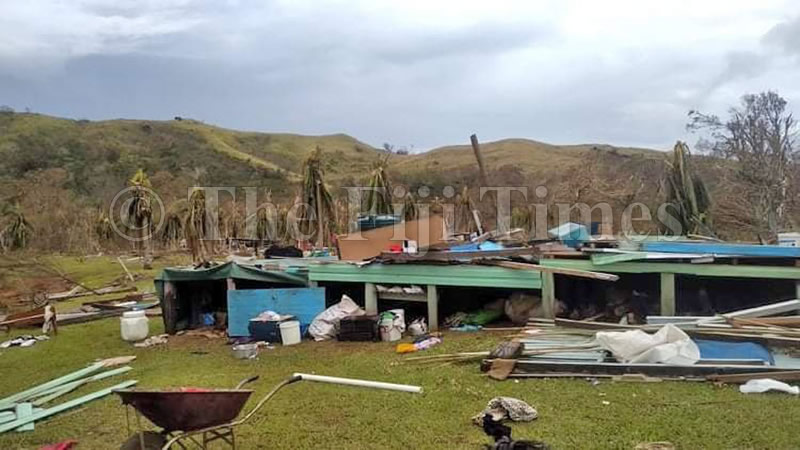
When it went past us in a blaze of fury and power that year, it left behind death and destruction, fear, frustration, anger and uncertainty.
The power Winston unleashed on the country was shocking.
Winston flattened houses, uprooted trees, blew away roofs, there was flooding, and there were frightened people, and death.
Packed with average winds of up to 220km an hour and momentary gusts of up to 315km an hour close to its centre, Winston, a fully-fledged Cat 5 megastorm swept through Koro Island, destroying 315 homes.
Concrete buildings were flattened.
The horror and tales of heroism live on in the minds of survivors.
Today, let us remind ourselves about our cyclone season.
Let us be prepared!

