
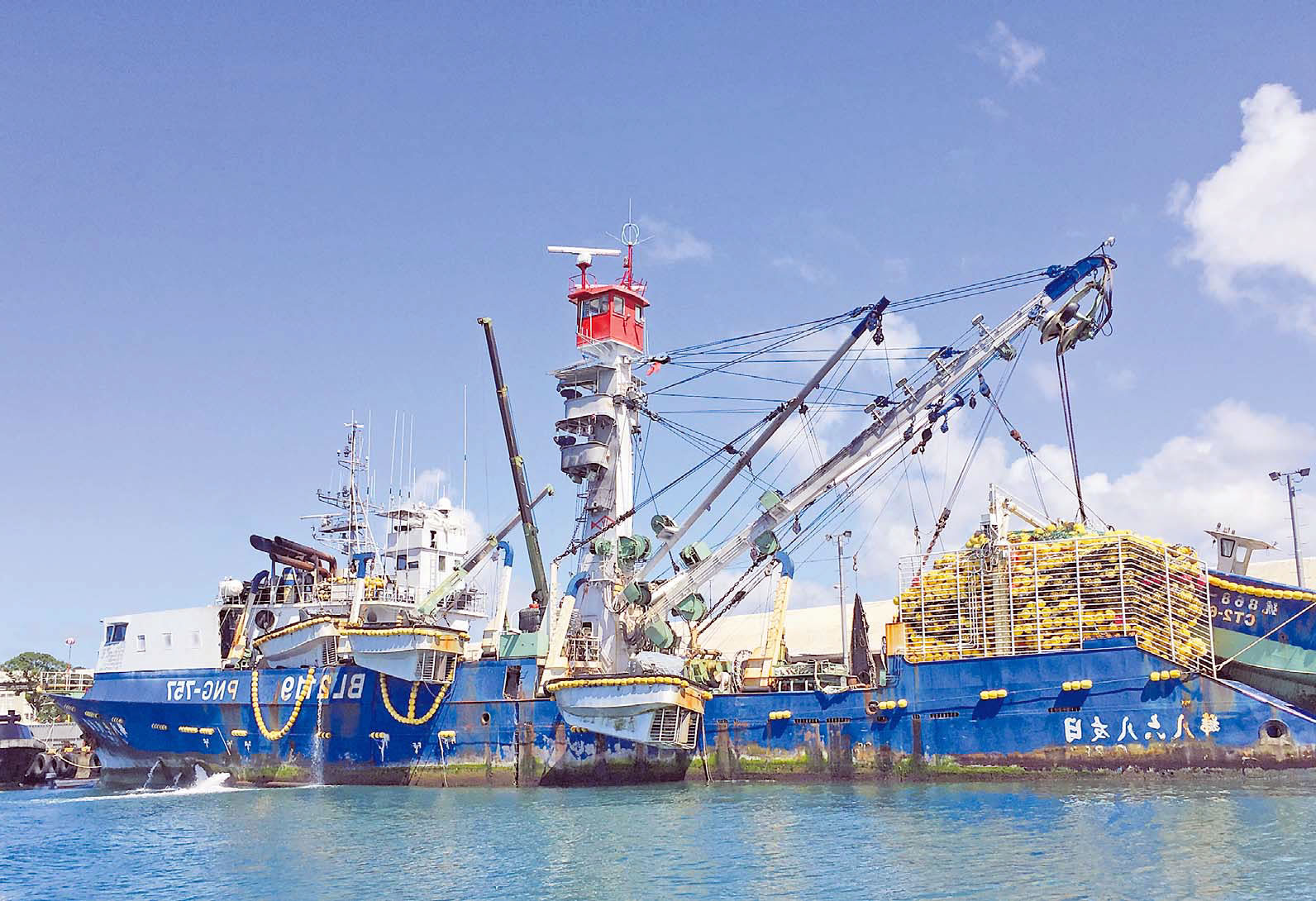
The implementation of relevant shark management measures could be the reason behind the decline shark interactions with shing vessels in the country from the Western and Pacific Fisheries Commission WCPFC) 16th Regular session of the Scientific Committee (SC16) revealed that there were an estimated total of 2448 interactions with different shark species by Fiji longliners (vessels) in 2019 compared to 4311 shark interaction in 2018 and 6355 shark interactions in 2017.
According to WWF, the decline in shark interactions over these years could possibly be linked to the implementation of relevant shark management measures including the ban on the use of trace wires and other restricted fishing gear.
This was outlined in the Fiji Offshore Fisheries Management Act 2012 along with it regulations on the use of circle hooks, deep setting, prohibited use of shark lines, and improved observers coverage over the years.
According to WWF, reduced interactions could also be an early signal of overexploitation, meaning that the interaction are reducing because there are perhaps less oceanic sharks in Fiji’s waters.
An increased number of interactions with sharks in the offshore sector had been reported through first-hand accounts and reports from fishing captains and crew onboard Fiji flagged fishing long-liners.
WWF Pacific’s sustainable fisheries and seafood program fisheries policy officer, Vilisoni Tarabe said despite the perception of greater number of sharks and suggestions to lift the ban on shark finning, there is a need to retain and improve current measures across the region.
“Data from the Fiji country reports submitted by the Fiji Ministry of Fisheries to the WCPFC over the past three years that have been verified by certified national observers’ show that Fiji flagged fishing vessels are interacting less with sharks,” he said.
The species of sharks mentioned are also listed on the IUCN Red List of threatened species are:
* whitetip blue shark is listed as near threatened;
* the oceanic listed as critically endangered;
* the Mako sharks listed as endangered;
* the pelagic thresher shark listed as endangered; and
* bigeye thresher shark species listed as vulnerable to extinction.
“Oceanic whitetip shark population in the Western and Central Pacific Ocean has declined by 95 per cent.
“It is important that current measures such as the shark fin import and export ban for example, are left in place and/or strengthened and that steps are taken by all WCPFC members to ensure compliance with the WCPFC Shark Management Measure (CMM 2019-04) which came into force on November 1 2020, to help protect all shark species.
“We also need to continue working with our industry partners to improve awareness of these iconic species and to lead the way in terms of applying best practice by-catch mitigation.”
Globally, WWF is calling on all contracting parties (CPCs) of the four major tuna RFMOs (regional fisheries management organisations) to implement a set of urgently needed measures – including to increase observer coverage on all industrial fishing vessels to 100 per cent by 2030 and to introduce recovery plans for all critically endangered and endangered oceanic sharks and rays by 2026 – in order to prevent extinctions of heavily depleted populations of pelagic sharks and rays and to support their recovery.
“Shark depredation is also an issue that can cause a range of negative impacts both ecological and economical,” Mr Tarabe said.
“It is where a shark partially or completely consumes hooked fish and bait from fishing gear before it is retrieved by the fishing vessel.
“This mostly occurs on commercial and recreational fisheries around the world and, despite its negative impacts on the fisheries, it is still an understudied topic compared to other fisheries issues.
“By-catch mitigation information from on-going research and the testing of shark deterrent approaches can help in mitigating shark depredation.”

