
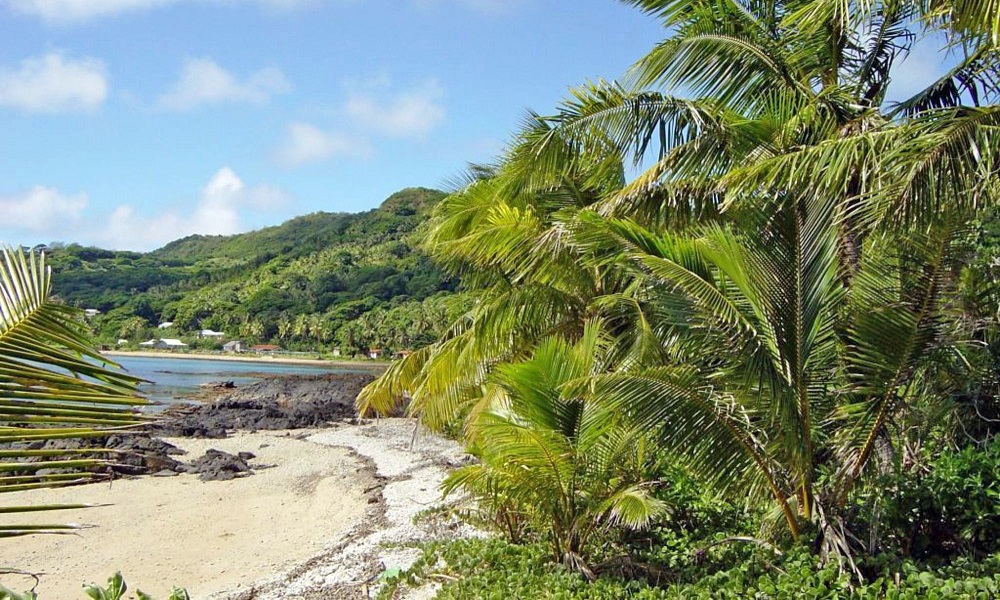
Makogai Island has always been known as the home of the leper patients in Fiji.
Not often had it been described as a beautiful island with its tall hills and beautiful ocean surface shaded with a veil of light blue mist.
On Wednesday, December 19, 1956, The Fiji Times published a very descriptive article about the island.
According to the report, the troughs of darker shade dropped down the sides of the hills like veins and those are the depressions that broaden out at the bottom of the hills into valleys and open spaces along the seashore.
A reef encircled the island which was about two-and-a-half miles in length and three square miles in area.
On calm days, the reef throws up a furrow of white border breaks at a narrow passage and it is 20 minutes run from there to the wharf.
The lagoon and the main settlement was hidden behind the high arms of the lagoon.
This newspaper reported that the boats sailed around the corner and suddenly before you was a breathtaking vista of colours, the deep sparkling blue of the lagoon, the browns and pale gold of the rocks and sand along the coast and the varying shades of green from the lawns, trees and gently rising slopes behind.
Makogai then, according to the article, changed from the lightly forbidding appearance out at sea of angular hills, to the softer, more intimate one of the valleys and flat spaces and delicate rounded slopes.
That was Dalice Bay, where the main hospital and the administrative area was situated.
Later on, when you climb the road above the bay, you see a breathtakingly beautiful scene which was the most photographed part of Makogai and was one of the finest views in Fiji back then.
The article reported that when you looked down on the shallow water of the lagoon, it was so crystal clear that it seemed hard to exist above the golden sand and flat, underwater rocks and odd patches of coral.
Trees dot the whole area, leaned over the buildings and gave cooling shadow for the gardens and walk for the patients and provided a restful contrast to the sun-bleached buildings.
There were two wharves at Dalice Bay, one for the patients and one for the sisters and other staff and visitors.
This was a pattern you find throughout the island although leprosy was far less contagious than tuberculosis, no risks ran at the needless spread of the infection.
The island itself was divided into two distinct areas, one clean which was forbidden to the patients and the rest (never referred to as unclean) which was the patients’ preserve.
The villages had a difference to those in other parts of Fiji and even to the village in the clean area at Nasau — there were no women.
The women patients lived in special quarters at the main hospital.
At Nasau Bay was the fine guesthouse built by the New Zealand Lepers Trust Board.
Before the erection of the building, visitors had to stay at the house of the medical superintendent.
This was naturally the cause of considerable inconvenience to the medical superintendent, who was a very busy man and to his wife.
The report highlighted that the guesthouse was only a few yards from the beach and visitors had glorious swimming and fishing at their door.
The casual visitors to Makogai might spend some time there without realising that it was the main leprosy centre for the South Pacific.
Most of the patients do not have much apparent signs of their disease, and they were one and all happy, cheerful people.
Makogai, with its beauty and aurora of peace, was some compensation for the years which many of them had to spend away from their homes.
It was a beautiful place in which to live but more than that, for the patients it was a place of hope and cure.
For the devoted nuns, it was a place of soul-satisfying, selfless work.

