
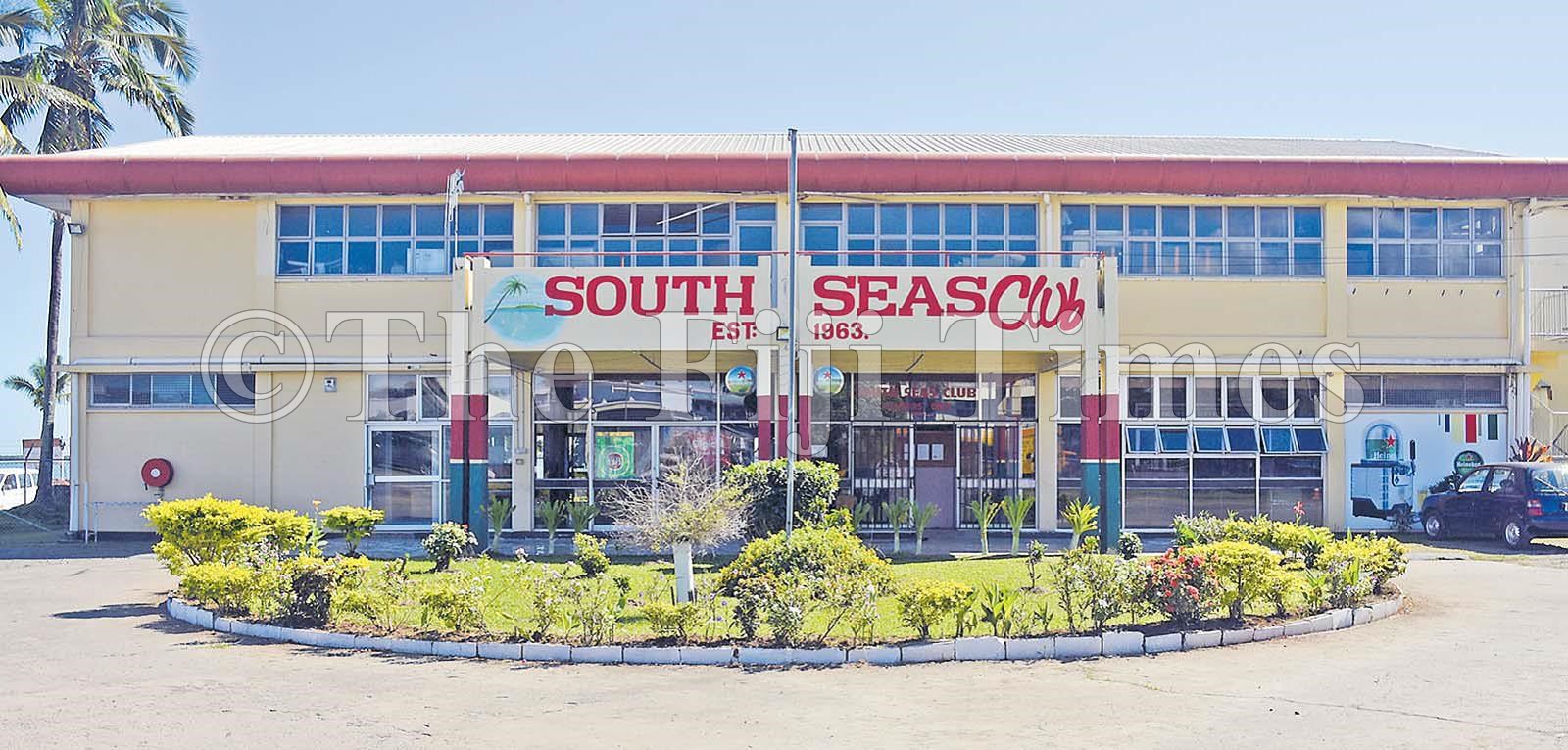
The South Seas Club is one of the oldest and most popular watering holes in the Sugar City.
Its renown is not limited to the people of Lautoka but Fijians and visitors from across the country who often stop by when visiting the area.
Situated on the corner of Nede St and Waterfront Rd, the club’s location, with broad views of Bekana Island and the bay, add to its appeal.
Vice president Duke Khan reminisced the origins and developments of the quintessential venue.
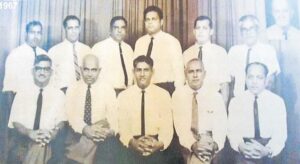
“The South Seas Club was established in early 1963,” he said.
It was established by a group of friends and before it was set up, there were two other clubs already in operation in Lautoka.
“As with many such organisations, the club adopted its constitution on March 3, 1963 and the document has guided its operations over the years.
“The first constitution of the club was repealed though and a new one came into effect from September 7, 1969.
“This was done to keep in line with the numerous changes that were happening.
“And an important fact to note was that the club was built on the ideal of multiracialism.
“The first property was mainly a wooden building and it was owned by the late BD Latchman.
“It was acquired after successful negotiations between the founding members and Mr Latchman at a cheap price when compared to the market value of the property.”
When quizzed about the reason the club was established, Mr Khan said issues at the Lautoka Club led to its formation. The property where the South Seas Club presently sits was acquired but this was not without its issues.
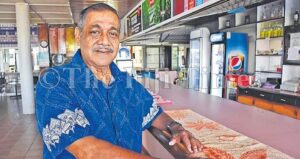
“We were faced with an obstacle because land had to be reclaimed. It was all sea and mangroves.
“It was then that Ratu Josaia Toganivalu raised his hand to assist, not only in arranging for the funding required for the reclamation process but also in sourcing soil for the project.”
The visionary founders and members of the club started to make investments and decided to establish income-generating projects to sustain the club’s operations.
“The South Seas Club has been making progress and today owns properties within the vicinity.
“The club property itself has a large parking space, a bowling green, swimming pool, snooker tables where local billiards and snooker competitions are held often, halls for hire, squash court and the South Seas restaurant that is rented out to Mr Hafiz Rahman.”
Mr Khan said the South Seas Club created history by sending a snooker team to India in 1974.
“A phenomenal event unfolded in December 1974 when a 13-member snooker team embarked on a one-month trip to India, pitting their snooker skills against various opponents.
“It was described as a tremendous success in terms of exposure because the boys experienced majestic India first-hand.
“The trip was organised by Samat Ali and financed from fundraising and generous contributions from the travelling players.”
Mr Khan said today, almost 60 years since its establishment, the South Seas Club continued to be an ideal place for the patrons to gather and relax.
“The cool sea breeze, coupled with scenic views – especially when the sun sets in the evenings – provides a tranquil and peaceful environment to all the club’s visitors.
“While enjoying a cold beer or a basin of kava, patrons can witness the movement of vessels into and out of the Queen’s Wharf, fishermen out at sea, Bekana Island and the majestic mountains towards Ba.”
Mr Khan said there were development plans for the club in the pipeline.
“The vision of 63 people more than five decades ago has been realised and this dream continues to mature and today, we are proud to say the club embraces people of all nationalities and creeds.”
Mr Khan said the pioneers of the club were Gani Wali Mohammed, Elahi Mohammed Hanif, SJ Lochan, Shiu Sharan Singh, Sheik Dada Sahib, Mohammed Atiq Khan, Mohammed Hanif Khan and Ravindra Singh.
He said the first president of the club was Mohammed Atiq Khan.
The South Seas Club’s patrons, over the years, have included former prime minister Timoci Bavadra, former prime minister and president Ratu Sir Kamisese Mara, Vuda chief Ratu Sir Josaia Tavaiqia, Ratu
Maleli Naulivou of Namoli Village and current Prime Minister Voreqe Bainimarama.

