
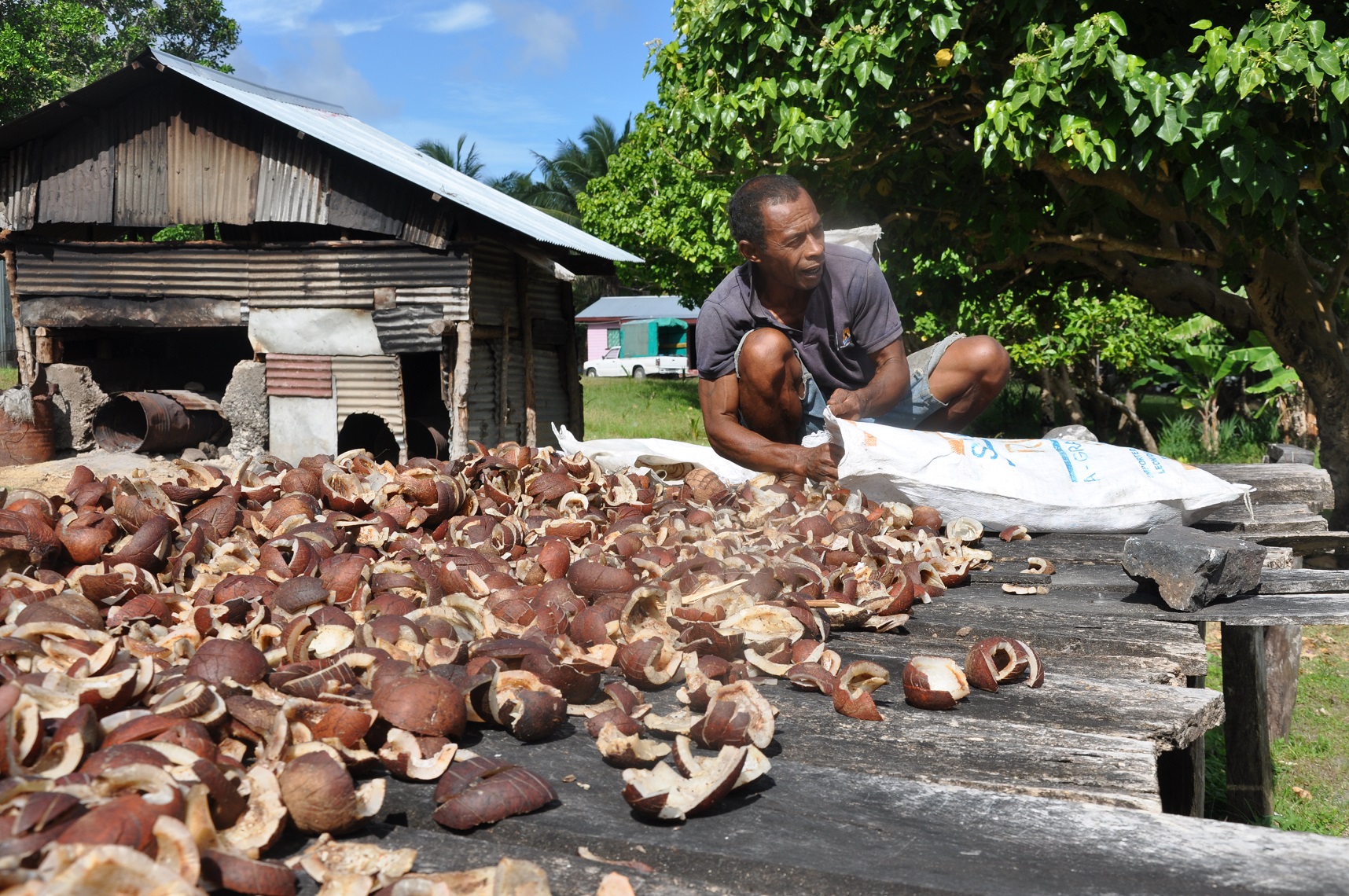
TWENTY-SEVEN experts and stakeholders from the coconut industry completed a four-day “Coconut Risk Management and Mitigation Manual for the Pacific Region” at the Tanoa International Hotel, Nadi.
According to the Pacific Community (SPC), the training was a follow-up of the successful Coconut Industry Development Programme (CIDP) workshop conducted in April this year that resulted in participants agreeing on twenty-four technical recommendations, as well as an online survey about incentives and risks disseminated to more than a thousand coconut stakeholders worldwide in June 2018.
The objective of the training was twofold – first, it endeavored to train regional participants on risk mitigation in the Pacific’s coconut sector.
Secondly, work was conducted with agriculture officers, entomologists, scientists, researchers and entrepreneurs from 14 Pacific island nations to complete the manual which the Pacific island countries could use to strengthen their coconut industry.
Coconuts have a unique potential to support sustainable and healthy rural livelihoods throughout the Pacific islands and can be a key driver for employment, income generation and economic growth in the region.
Coconut in the Pacific countries and societies is considered the ‘tree of life’. It is a major element in the diets of local people and is vital for food security health and economic reasons.
The coconut industry also goes beyond that – in that it is woven into the fabric of Pacific communities providing raw material and a critical input for family and societal needs such as housing, transport, ornaments, culture and other elements.
In terms of livelihoods, Pacific communities are largely rural based and coconut plays a very important economic role, particularly in the more isolated rural communities, where formal employment is scarce and where other alternative cash crops do not exist.
Commercially oriented production of coconut for copra and coconut oil extraction started in the colonial times when European settlers established plantations all throughout the region from 1890 to 1930 (Great Depression).
During this period small holders also managed to add their own production to the plantation’s exports of copra which for them presented high returns. After the 1960s the price of coconut started declining together with other vegetable oils with its image as a food commodity severely deteriorated, as significant competition with other oil commodities such as soy oil appeared.
Interest in coconut and investment in plantations remains low in most cases and many producers are turning their attention to other more high value agricultural commodities with better potential for higher returns. At the same time, in some countries some large estate owners have partially utilised their land for real estate purposes, targeting foreign investors.
However new market opportunities have emerged in high value products from green coconut and other parts of the plant (VCO, coconut water and coconut sugar). These are becoming increasingly popular due to newly identified health benefits debunking previous views which regarded coconut oil as an unhealthy edible oil due to its saturated fat content that could cause heart disease.
A greater demand for these products may bring in parallel positive effects in local economies and producers groups directly benefitting from higher whole nut prices at lower production costs (when compared to copra sales).
Using the right technology and approach, producers, and in particular women groups, may be able to have a stronger role in coconut related value chains or even directly sell to the final consumer market.
Additional information extracted from https://lrd.spc.int/coconut-industry-development-for-the-pacific

