
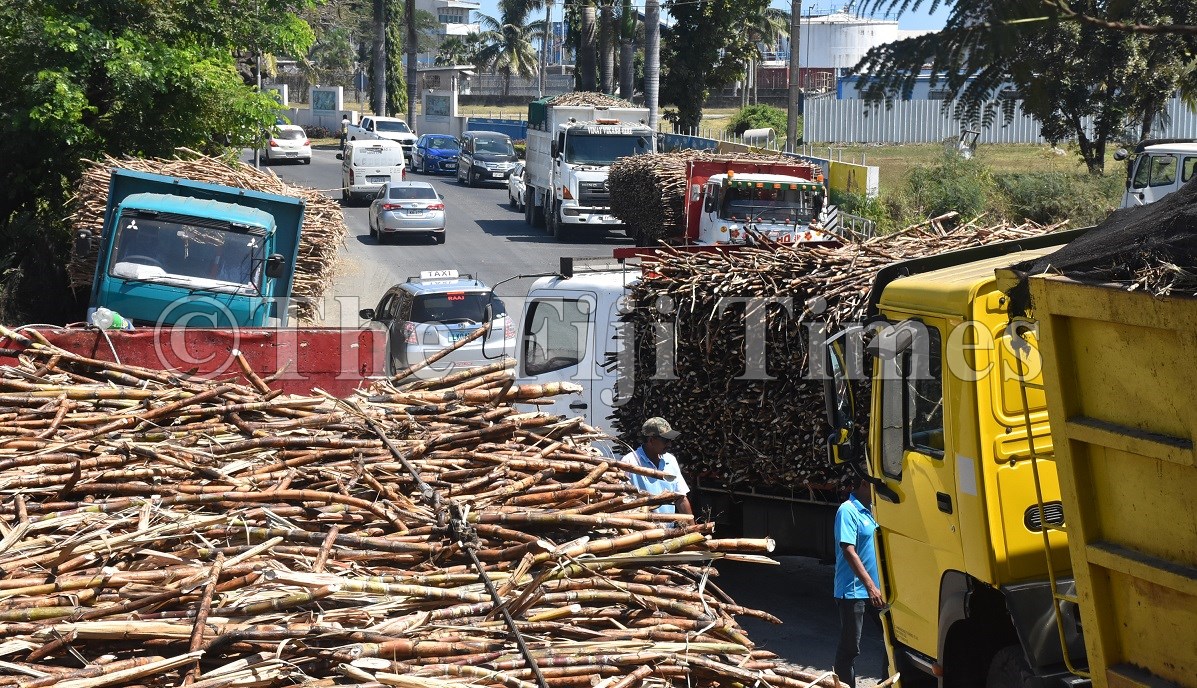
More than 90 per cent of Fiji’s sugar cane is now transported to the mills by road, Minister for Sugar Charan Jeath Singh told Parliament yesterday, as he outlined the government’s continued investment in improving key cane access routes.
Singh said the shift toward road transport—driven by increased use of mechanical harvesters and the gradual decline of the railway system—has placed new pressure on rural infrastructure.
“Today, over 90 per cent of our cane is transported to the mills by road,” he said. “With the increased use of mechanical harvesters and the shift away from rail, there is now greater demand for upgrading in-field roads and rural infrastructure.”
The Minister said efficient cane transport remains essential for maintaining quality, reducing delays and ensuring mills can crush on time.
He told Parliament that from 2012 to the 2024–2025 season, government invested $43 million in upgrading and maintaining cane access roads. For the 2025–2026 financial year, the allocation has increased to $3.9 million to ensure better maintenance.
“These long-term upgrades are critical for improving access for trucks and machinery,” Singh said.
In the last two years alone, 35 crossings have been repaired, upgraded or newly built across the Lautoka, Rarawai and Labasa mill areas. Another 1,351 growers have received culverts under a fully government-funded program to replace unsafe low-cost crossings and improve access to farms.
While the majority of growers now rely on trucks, Singh stressed that some still depend on the railway system, especially in areas where labour shortages make manual harvesting difficult.
He reiterated that the government is committed to improving logistics across the sector to support growers and ensure timely delivery of cane to the mill

