
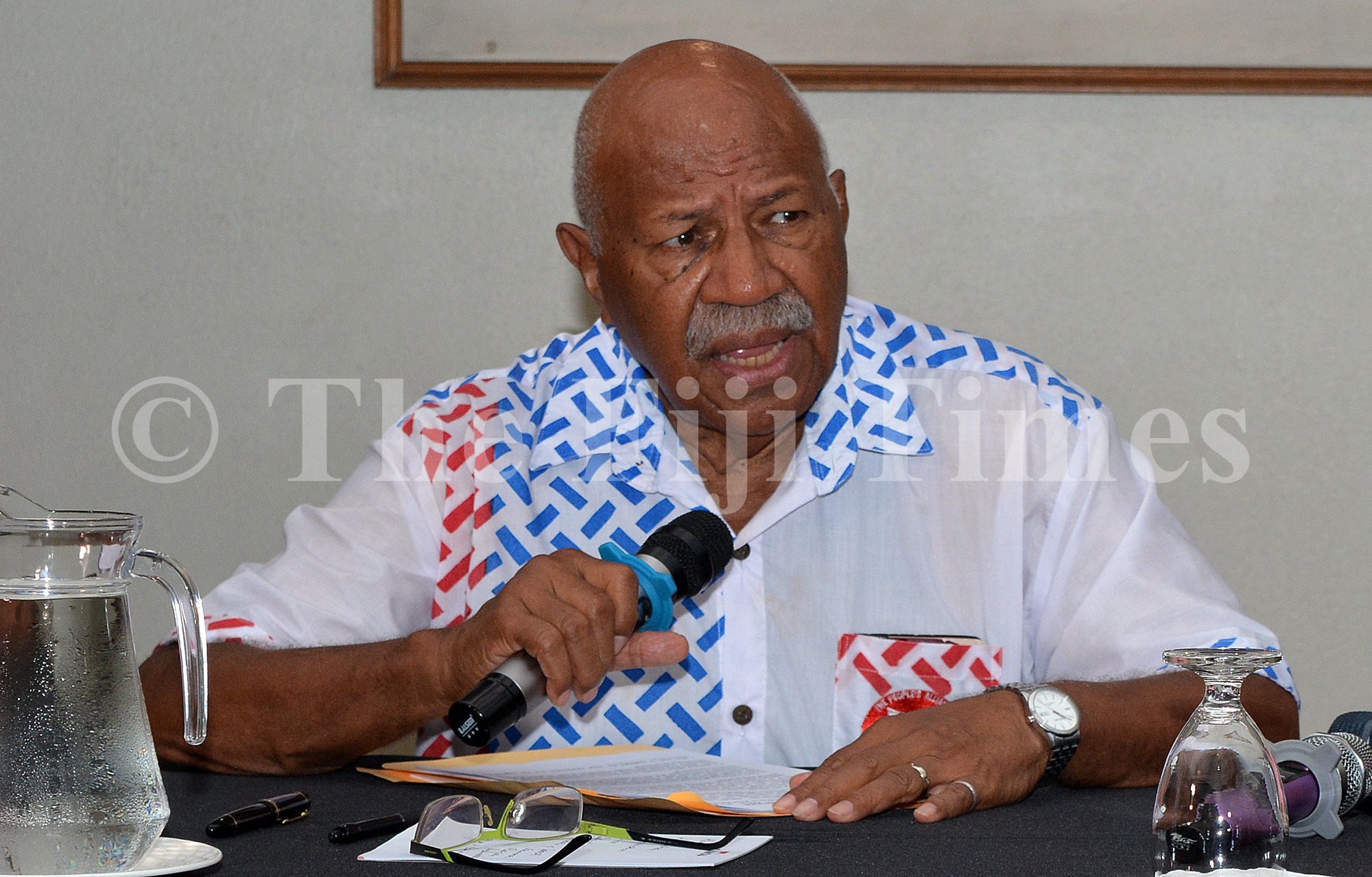
A People’s Alliance (PA) led government will reinstate the Great Council of Chiefs (GCC) because it believes “the GCC is the institution best positioned to put in place training and leadership programs for the iTaukei traditional leaders”.
Party leader Sitiveni Rabuka said their policy was to “equip the iTaukei traditional and emerging leaders with the right leadership, administration, development and technical skills to move forward and lift the standards of living of their communities and organisations.”
Mr Rabuka said during recent trips to New Zealand he met Maori leaders and a number of policy experts “to learn more about how the Maori leadership were able to develop their economy and accelerate the socio-economic progress of the indigenous communities”.
He noted that in the past 15 years, the Maori economy had grown from $25 billion to more than $100 billion Fijian dollars – “a 400 per cent increase, and growing at double the rate compared to the rest of the country’s economy”.
“A major driver of the Maori success was the wide range of comprehensive and targeted leadership development programs for both current and emerging Maori traditional leaders”, Mr Rabuka said.
“The leadership skills developed were founded on Maori values, ideology and traditional leadership knowledge in combination with modern tools of management.
“What I found rocked me to the core because the opposite was happening in Fiji, with the GCC stripped apart and all leadership training for iTaukei leaders stopped.”
Mr Rabuka said that “there is no iTaukei leadership in all of Fiji except for one man, Bainimarama”.
He said when compared with the results of the Maori leadership training, the opposite was happening in Fiji. “All the evidence shows the iTaukei have gone backwards on almost all the established socio-economic indicators”.

