
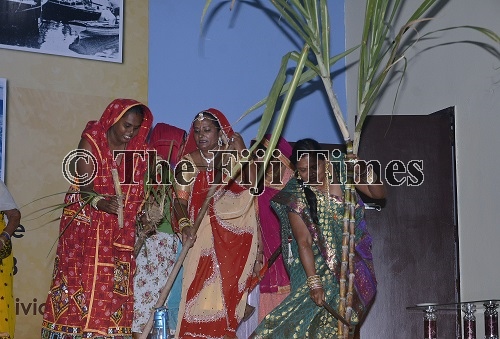
An important date in the history of Indo-Fijians passed without even identifying or recalling it on or about the day, it actually took place. Yet, it was the most significant milestone in the history of Girmit as all indenture (Girmit) contracts were terminated on January 1, 1920. Consequently, this year marked the 100th anniversary of the termination of the indenture contracts, though the legislation, which authorised recruitment under the indenture system, was abolished in 1917. However, those who were still serving their indenture continued working until January 1, 1920.
True freedom
The unexpected termination of the indenture contracts meant true freedom for the entire Girmitiya community. It also removed the shadow of the stigma that tainted India’s honour and dignity as a source for supplying bonded labour under the indenture system. Once the Indian leaders, seeking India’s independence, including Gopal Krishna Gokhle, Pundit Madan Mohan Malviya and Gandhi came to know and realise indentured labour was a facade replicated slavery, they decided abolition of the indenture system should precede their fight for India’s independence. It was a major diversion but an important step in their march towards attaining India’s independence from British rule.
Resistance stirred
In their view, their acquiescence with the indenture system did not give them the moral high ground to fight for India’s independence. With concerted focus and Gandhi at the helm, the Indian nation responded in accord. One of the most significant outcomes was women, for the first time in the history of India, moved out of their confines into the public arena to engage in public protests. They aimed to reclaim the honour, dignity and respect for Indian indentured women abroad, defiled and dishonoured in the colonies. This unison of support meant a new resolve to fight collectively for causes involved Indian honour and dignity and, indeed, its fight for India’s independence, which came almost four decades later. However, the first air of freedom reached the nostrils of the Girmitiyas was a major feat for Indians everywhere, as their motherland was liberated from the stigma of the indenture system.
Freedom attained
Consequently, on January 1, 1920, when the doors of the indenture system closed and everyone became free, the Girmitiyas had reason to celebrate with zeal and zest. They called themselves ‘khula’ (free), a word taken with an assertive degree of pride as it meant liberty and freedom lost to them since the day they became indentured workers in the colonies. Interestingly, khula was a nostalgic term the Girmitiyas consistently used to claim their freedom from the servitude of Girmit. Therefore, what happened on January 1, 1920, was everyone became ‘khula’ or free from the shackles of a system that enslaved and demeaned them. Indeed, the attainment of ultimate freedom was a rare occasion which called for a celebration. In their own way, they celebrated, burning the effigies of the kulambar (white overseers), the CSR Company and lit the bonfire to burn and destroy the vestiges that identified them with Girmit. According to them, the suffering of Girmit, linked to their karma (sins of previous lives) and their atoning sacrifices through the sufferings of Girmit ultimately liberated them – they genuinely felt.
Culture defined
However, the Girmitiyas had no inkling of what the future held for them and understandably, they hoped for better days ahead with presumed freedom, equality and dignity. However, it eluded them including their descendants as these elements had a fleeting or changeable application on them from time to time.
Another issue rose significantly in the post-indenture period was the evolution of the Indo-Fijian culture. The servitude of Girmit could not help shape it in an environment where the struggle for survival and attendant suffering made other issues like culture, customs and traditions irrelevant and secondary. However, cultures do not die – they evolve, conditioned by internal ferment and external pressures, which provide it with the dynamics for orderly evolution to assert its place among others. Similarly, the Indo-Fijian culture underwent comparable motions, but the conditions were harsh and hostile. Yet, it endured and prospered because the people were resourceful and resilient.
Culture asserted
Sadly, the Indo-Fijian culture grew as an orphan without identity and yet nothing could smother its progression. It gained greater impetus since January 1, 1920, as it provided a better environment, away from the turbulence and infamy of Girmit, which followed social and cultural renaissance. It was neither deliberate nor organised but consequential and sustained. Illiteracy was high but the people had the vital fragments of their religion, culture, customs and traditions to structure a society, which perforce had the ability to co-exist alongside others. Consequently, circumstances guided largely obscure evolutionary processes, which retained its fluidity and adjustability, carving a culture that gradually gained cohesiveness. Since the late 1950s, the Indo-Fijian culture underwent constant refinement, largely through the spread of education, radio and later TV, not forgetting the Bollywood films, which regularly stirred changes. However, one of the sad things was the Indo-Fijian culture per se lacked recognition and assertiveness by the community to which it belonged.
Distinct and distinguished
The reason for it is assigned with hindsight, noting the community was always classified and identified as Indian and their culture as Indian culture. It linked Indo-Fijians to the mother culture on the Indian mainland and not a subculture that emerged out of it thousands of miles away in the Pacific. Interestingly, the Fiji Indians identifying with their distinct Indo-Fijian culture, relatively, is of recent origin. Its realisation and adoption have given it a distinct cultural identity and has the basic mooring, including its own lingua franca to assert its place among various cultures across the world. For it, the Girmitiyas must take the credit as they gave birth to it, but could not nurture it and yet it blossomed through difficult terrain, distinguishing itself as one of the most resilient and progressive cultures in the world.
The legacy of the Girmitiyas continues. They had an iron constitution, confronting adversities with courage and sacrifice to strive and achieve – qualities that resonated and may continue to resonate across generations. On the 141st Anniversary of Girmit and 100th Anniversary of the termination of indenture contracts, we pay our heartfelt gratitude to them. May their souls rest in peace!
nRajendra Prasad is the author of books, Tears in Paradise (2004) and Enslaved in Paradise (2018), former Ba Town clerk and lives in Auckland, New Zealand. The views expressed are not necessarily shared by this publication.

