
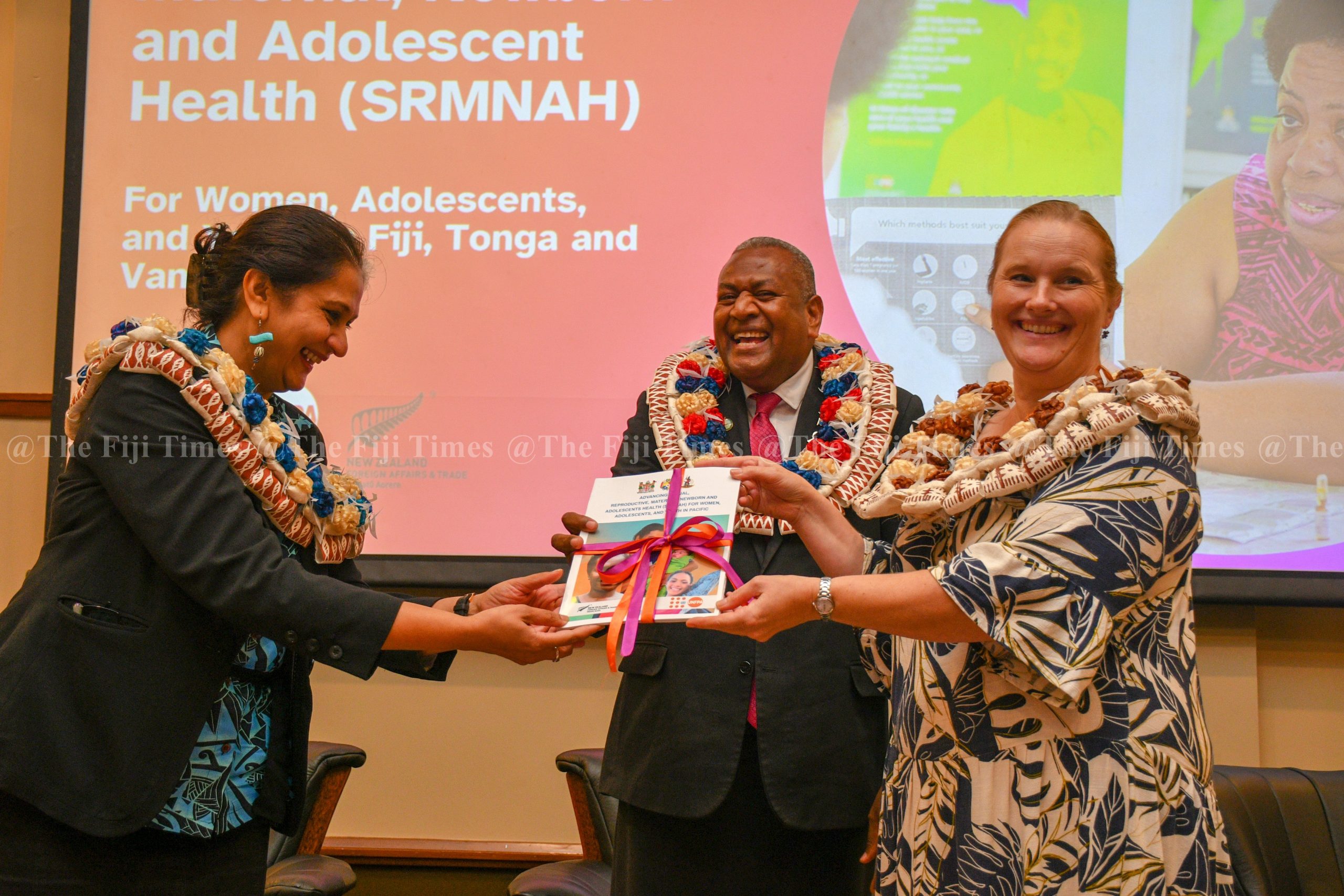
NEW Zealand has stepped in with a $5.6million boost to strengthen sexual, reproductive, maternal, newborn and adolescent health services across the Pacific.
The funding supports the Advancing Sexual, Reproductive, Maternal, Newborn and Adolescent Health for Women, Adolescents and Young People in the Pacific project, launched yesterday at the Grand Pacific Hotel in Suva.
Director and Representative of the United Nations Population Fund (UNFPA) Pacific Island Countries, Bidisha Pillai announced the initiative, which aims to tackle serious gaps in healthcare quality, access, and readiness across Pacific nations.
“The SDG target for us is 70 per 100,000 live births, so we are in a situation where we do need to accelerate progress,” Ms Pillai said.
“Our health systems in the Pacific do face significant challenges.
“The quality of care is often suboptimal due to shortages of trained personnel, weak infrastructure, the geographical nature of the dispersed islands, and logistical hurdles in reaching remote communities.”
She said less than 4 per cent of existing health facilities in the Pacific are able to provide gender-based violence services, while fewer than 6 per cent are prepared to offer adolescent and youth-friendly services, a worrying gap given that almost 60 per cent of the Pacific population is under 35 years old.
Ms Pillai added that in Fiji, two out of three women experienced intimate partner violence, underscoring the urgency of strengthening reproductive and gender-based health services.
“Provision of adolescent and youth-friendly services to tackle issues of early and unintended pregnancies is really crucial.
“The alarming rise of HIV infections in Fiji adds to the urgency of this project.”
The project will begin with an initial $2.6m investment in its first year and will work closely with the Ministries of Health in participating Pacific countries to align with national development priorities.
“We could not have been here had the governments and the Ministries of Health of these three countries themselves recognised these as critical gaps and the desire to tackle these challenges.”

