
Housing solutions
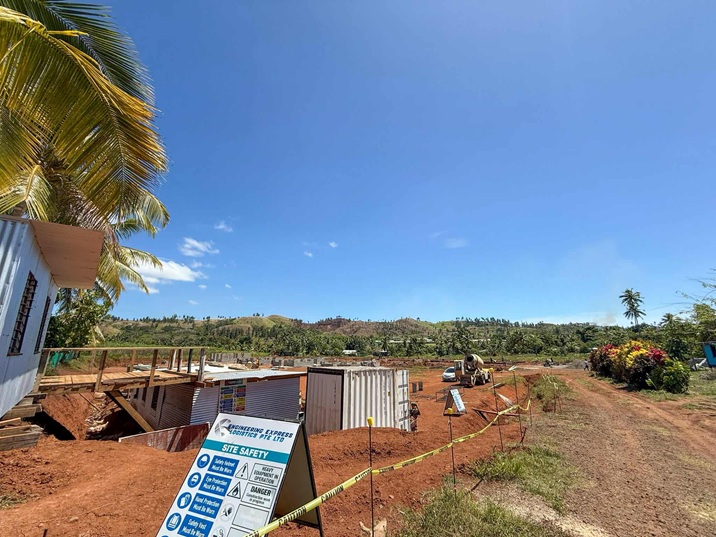
It is a great pity that the people of Nabavatu in Macuata have now been eking out a miserable existence in leaky tents for five years (FT27/10/25), particularly so because only a couple of generations ago their ancestors would have long ago built them comfortable and attractive homes from traditional materials. Perhaps we can learn from this. Next time a number of houses in a village are destroyed by a hurricane or floods, government officials should first find out what materials and skills they need to rebuild them in the traditional manner. For instance, if reeds or house-posts are in short supply, they can be obtained from somewhere they are plentiful. If the skills have been lost, I am sure a number of experts from places such as Navala, Nasivikoso or Nadroumai would be happy to assist for food and maybe a small fee. The result: within just a matter of weeks, beautiful and functional houses and, more important, revival of the traditional knowledge that will serve future generations. Very simple, very obvious, and satisfactory on all counts. But it won’t happen. I wonder why not? PAUL GERAGHTY USP, Suva
Back in history
Thank you, Andrew Naidu, for yesterday’s Back in History that featured Prince Charles’ trip to Fiji. While addressing Fijians at Nasova, Levuka, the site of the signing of the Deed of Cession, on October 10, 1974, Prince Charles assured them that the Crown would always hold a deep affection for them. Prince Charles unveiled a plaque set in a stone to commemorate the centenary of the signing of the Deed of Cession. The pictures (FT 28/10) showed Fijian hospitality at its best. The then Mayor of Suva CR Isireli Vuibau took a knee as a mark of respect to Prince Charles on the royal visitor’s arrival at the Civic Centre. Prince Charles, with his trademark bula smile, also enjoyed meke (traditional Fijian dance) on Bau Island. The tour that Prince Charles did in the Old Capital was heart-touching as he walked through the ranks of hundreds of schoolchildren, stopping to speak to teachers and students from almost every school. These memories will linger in the minds of many. The Fiji Times, being our archive, re-ignites those golden memories, and I thank the editor-in-chief and his team for taking us back into Fiji’s beautiful history. Rajnesh Ishwar Lingam Nadawa, Nasinu
Fiji Airways CEO
I was surprised that an Australian has been appointed as the new CEO of Fiji Airways. I would have thought that a local God-fearing person who undertook prayers and fasting and with some financial acumen would have been more appropriate. I cannot see why a suitably qualified local could not be found for the Fiji Airways job. Please don’t tell me there is no such person in Fiji. In any case, what would Fiji and Fijians do without Australia and Australians? Jan Nissar Sydney, Australia
Politics in the sugar industry
Politics have always been part of the sugar industry. Almost every politician has to say something about the sugar industry and today the industry is like a football going from one end of the field to another. Many peoples livelihood depends on the industry. Let us see the fact, from three sugar mills in Viti Levu, we are down to one sugar mill. Luckily the only sugar mill in Vanua Levu is still going strong. God forbid if something happens to the only sugar mill in Vanua Levu. Lautoka Sugar Mill has its own problem, growers talk about land lease expiry, cost of delivering sugar cane and then the cane cutters’ issue. The only way forward for our sugar industry which many said was dead today, is to take all politics out of the industry and run the sugar industry like a business. Narayan Reddy Lautoka
Jobs abroad
A record number of Fijians have departed for jobs abroad as reported in The Fiji Times (FT 19/10). This fairly indicates they are truly well blessed and dedicated and make sacrifices wherever they work, local or abroad. Definitely they have shown the way for desperate job seekers. Hard work pays peanuts at times but dividends in future. I haven’t seen anyone who has died by working hard, as I was always reminded by my Girmitiya grandfather who disciplined us from an early stage. Any job, big or small, performed to the satisfaction of the employer is rewarding for future security. “Your job is going to find the last part of your life and the only way to be truly satisfied is to do what you believe is great work.” — Steve Jobs. Tahir Ali Hamilton, New Zealand
Leadership and action
I believe that in politics nothing is permanent. That is most certainly a truth that everybody should know. Leadership is about action and not just position. NAVNEET RAM (TD) Lautoka
Unauthorised burning
The unauthorised burning of the Lautoka rubbish dump in Vunato has seen smoke across Lautoka City. Sometimes the smoke thickness causes visibility problems. It even comes into homes and families have young children. I pity the people who live there and I am sure they are suffering. It’s time for some real leaders of Fiji to stand up and say, “I will take responsibility”. NAVNEET RAM (TD) Lautoka
Swimming pool
The so-called special administrators of Lautoka have changed their promise now as they say that the Botanical garden swimming pool will be completed next year. In the beginning of 2025 they promised to have it ready by November for the public to use, now a complete change in their statement. What else can the people expect from these failed politicians who became special administrators of our city? Geoffrey Chand Lautoka
Legal battle
As we move forward and closer to elections, the days ahead looks like a bumpy ride. During these bumpy rides, some will fall short, some will cling on, some will be undecided, some will just go with the flow. Now the court is overwhelmed with these legal battles and only time will tell us what would be the final decision. As for now, let’s relax and enjoy the ride to our political future. Kalou sa raica. Juki Fong Chew Nadawa, Nasinu
Fumble and tumble
Our Coalition Government never ceases to amaze me. Every two to three months, it fumbles and tumbles with self inflicted crisis. The resignation of the two deputy PMs comes as no surprise. The two gigantic leaders have to remember that they are competing in a three or four-legged race with only a small number of competitors. Rakesh Chand Sharma Adelaide, Australia
Ancient mill
The Jerusalem Post carries a news article telling us about Israeli archaeologists recently uncovering medieval sugar mills beneath Gan Hashlosha National Park. The find was made during infrastructure work in the area. With a soft spot for our own sugar industry, my mind couldn’t resist imagining our own sugar mills in the same story. Don’t know who, but someone gotta save our mills! Donald Singh Suva
Chief and the vanua
Chief and the vanua
The fire in the great bure crackled, casting dancing shadows on the faces of the elders. Outside, the whispers of the 2026 elections had begun to swirl like the coastal wind, already seeking to divide, to promise, to politicise. And at the centre of it all sat the Momo Levu, Tui Natabuivalu, a man whose name was often murmured in the same breath as high office. A young, ambitious clansman finally voiced the question hanging in the smoky air. “Ratu, with the elections coming, your voice would be the strongest. Why do you remain silent? Why not lead us in that arena?” The Tui Natabuivalu was silent for a long moment; his gaze fixed on the flames as if reading the ancient stories within. Then, he spoke, his voice quiet yet filling the space completely. “The vanua does not ask for a politician,” he began. “It asks for a chief. There is an ocean of difference between the two.” He leaned forward, his eyes sweeping across the gathered men. “A politician must choose a side. A chief must hold all sides. A politician fights for a party’s victory. A chief must fight only for the people’s peace, their prosperity, their unity.” He gestured towards the window, beyond which the lights of the diverse town twinkled. “If I put on the colours of one party, what happens to the Fijian of Indian descent who has lived on this land for generations and looks to me for fair guidance? What happens to the part-European farmer, or the Chinese shopkeeper? I become not their chief, but a representative of a faction. I become a divider of the very people I am sworn to unite.” He placed a hand on the woven mat beneath him, feeling the connection to the land, the soil, the ancestors. “The vanua is not a constituency to be won. It is a living, breathing entity. It is the soil we till, the reefs we fish, the traditions we uphold, and the future we build for our children. Politics is the weather — it changes with the season. It brings storms of rhetoric and droughts of inaction. But the vanua… the vanua is the land itself. Eternal. It must be tended to with neutrality, with impartiality, and with a transparency as clear as the lagoon.” “The role of the chief,” he concluded, his voice firm with conviction, “is to be the great tree whose roots are deep in the vanua, whose branches offer shade to everyone beneath it, regardless of who they voted for. Our wisdom is not for scoring political points; it is for guiding our people on the right path. Our strength is not for contesting elections; it is for nation-building.” He looked at the young clansman, his expression both stern and kind. “So, I will not enter that race. My race is longer. It is to ensure that long after the posters of 2026 have faded and blown away, the vanua remains strong, its people united, and its heart beating as one. “The chief must always put the vanua first. Everything else, especially politics, is a distant second.” Seveci Tora Tacirua Heights, Nasinu

