
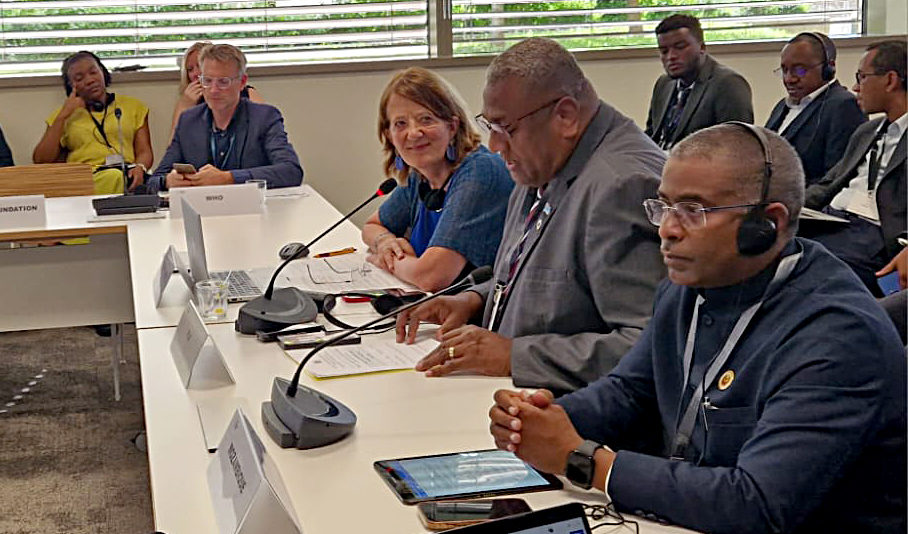
FIJI has warned the international community that climate change is now directly threatening efforts to contain the country’s growing HIV and tuberculosis crisis, with severe weather events disrupting treatment services, medicine supply chains and healthcare access for vulnerable communities.
Speaking at a high-level Global Fund dialogue held on the sidelines of the 79th World Health Assembly in Geneva on Thursday, Assistant Minister for Health and Medical Services Penioni Ravunawa said Pacific Island countries were already experiencing the health impacts of cyclones, flooding, droughts and supply-chain interruptions caused by climate change.
He told delegates Fiji recorded 2016 new HIV diagnoses in 2025, alongside increasing rates of TB-HIV co-infections, raising serious concerns for the country’s health system.
He stressed that climate resilience was now critical to ensuring continuity of treatment, laboratory services, medicine distribution and outreach programmes during emergencies.
The Assistant Minister welcomed the Global Fund’s Climate and Health Catalytic Fund and technical assistance provided through the University of Melbourne and Climate CATCH Lab, which will help Fiji integrate climate considerations into its Grant Cycle 8 funding request.
Mr Ravunawa reaffirmed Fiji’s commitment to strengthening sustainable and country-led health systems through climate-proofed infrastructure, resilient supply chains, emergency preparedness and community-based healthcare services.
He also acknowledged the support of the Global Fund and development partners in Fiji’s HIV response, including planned access to lenacapavir as part of national HIV prevention efforts.
The dialogue brought together health ministers, senior government officials, donor representatives and development partners to discuss climate-resilient approaches to combating HIV/AIDS, tuberculosis and malaria in vulnerable health systems.

