
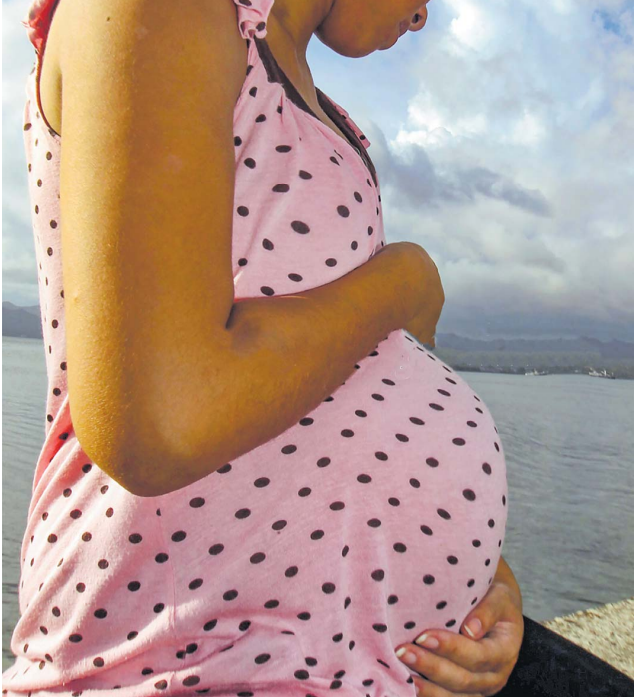
Teenage pregnancy in Fiji has reached alarming levels, with Assistant Health Minister Penioni Ravunawa recently declaring it a national priority that must be addressed with the same urgency as a public health crisis.
Statistics reveal a disturbing picture: in just the first five months of this year, hospitals recorded 489 underage pregnancies, including eight cases involving girls under the age of 15. By 2024, the number nearly doubled to 858 teenage pregnancies, with 17 girls under 15 and the remainder between 15 and 19.
Teenage pregnancy
These are not mere statistics. They represent children forced into motherhood, robbed of their education, and pushed into cycles of poverty, ill health, and stigma. Teenage pregnancy is more than a health issue, it is a mirror of Fiji’s social, economic, and moral challenges.
Real voices: When teenage pregnancy becomes a life story
Silent and suffering – The special needs girl in Taveuni
In Taveuni, a 15-year-old non-verbal girl with special needs recently gave birth. She was one of two girls with disabilities impregnated in the area (web source).
The shocking case highlighted the vulnerability of disabled children, many of whom are unable to speak out or defend themselves. Her pregnancy was not just a tragedy but a failure of protection by family, community, and institutions.
The 14-year-old student from Labasa
In Labasa, police investigated the defilement of a 14-year-old girl, whose pregnancy only came to light after she was bullied and later confirmed to be expecting a child at the hospital (web source).
This is not an isolated case — it exposes the cruel truth that many teenage pregnancies are the result of abuse and exploitation, not consensual choices.
A tale of inequality – Punished for becoming a mother
In another school, a teenage girl who became pregnant was not allowed to return to her classes after giving birth.
Shockingly, the boy who impregnated her was allowed to continue his education uninterrupted ( web source). This double standard is both unjust and damaging, reinforcing the stigma that young mothers face while absolving boys of accountability.
Against the odds – Adi Laite Naivalu Masitabua’s Story
But not every story ends in despair. Adi Laite Naivalu Masitabua, who became pregnant at 17 while still in Year 12, decided to return to school despite the shame and hardship.
With support from her teachers, she completed her exams, enrolled in Year 13, and eventually earned a TSLS scholarship.
Today, she is pursuing her Bachelor’s degree at the University of the South Pacific (web source) Her story proves that with compassion, support, and second chances, teenage mothers can rebuild their futures.
Why is teenage pregnancy rising in Fiji?
1. Family breakdown and weak social support
Many teenagers grow up in homes where parental guidance is weak or absent. Without strong family support, they are more vulnerable to risky relationships and exploitation.
2. Sexual abuse and exploitation
Too many teenage pregnancies in Fiji are the direct result of sexual abuse. The cases above show how perpetrators are often relatives, trusted community members, or authority figures. Silence and stigma protect the abusers while the victims carry the burden.
3. Peer pressure and risky behaviours
Teenagers, influenced by peers and exposure to social media, often experiment with relationships, alcohol, or drugs. Without proper education and guidance, these risky behaviours lead to unsafe sexual encounters.
4. Poverty and economic struggles
Poverty drives young girls into transactional relationships. Some accept money, food, or gifts from older men, often leading to pregnancy. Poverty not only drives the crisis but also deepens it, trapping young mothers in cycles of deprivation.
5. Lack of comprehensive sexual education
Schools still fall short in delivering frank, comprehensive sexual and reproductive health education. Teachers are often uncomfortable addressing contraception and consent, leaving students to rely on peers or the internet for answers.
6. Cultural silence and stigma
Sex remains a taboo subject in many Fijian households. Parents shy away from these conversations, leaving their children uninformed and unprepared. Silence and stigma make the problem worse.
How can Fiji combat teenage pregnancy?
1. National teenage pregnancy taskforce
The Government must urgently establish a National Taskforce to coordinate ministries, NGOs, and communities—just as Fiji did during COVID-19.
2. Justice for victims of abuse
Every case of defilement must be investigated swiftly, and perpetrators must face justice, no matter their status in the community.
3. Comprehensive sexual and reproductive education
Schools must teach age-appropriate, practical lessons about relationships, contraception, and consent. Parents must also be trained to talk openly with their children.
4. Youth-friendly health services
Fiji must expand youth-friendly clinics where teenagers can access counseling, reproductive health services, and confidential support.
5. Empowering girls to stay in school
Scholarships, financial support, and flexible education programs can ensure teenage mothers — and at-risk girls —continue their schooling.
6. Community and church involvement
Faith-based groups and community leaders must speak out, not judge. They can be powerful advocates for compassion and protection.
7. Ending stigma and offering second chances
Young mothers deserve dignity, compassion, and the opportunity to rebuild their lives, as seen in the inspiring case of Adi Laite.
A call to action – Protecting Fiji’s children and future
Teenage pregnancy is not just a “women’s issue” or a “private matter”—it is a national crisis. Every child forced into motherhood represents a failure of society to protect, educate, and empower its young.
As Mr Ravunawa said in Parliament: “Ending the stigma is our shared duty. Protecting our children is our sacred responsibility.”
If Fiji continues with “business as usual,” the crisis will deepen, robbing generations of girls of their futures. But with bold action, united leadership, and community compassion, we can break the cycle and build a society where every child grows up protected, empowered, and free to reach their potential.
INDAR DEO BISUN is a former teacher and a lecturer in education at the Fiji National University. The views expressed in this article are his and do not reflect the views of this newspaper.

