
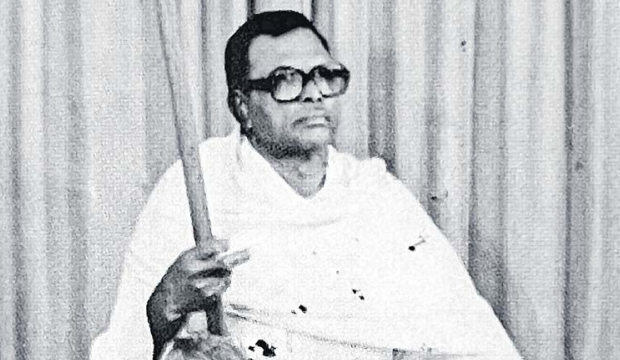
IN 1985, Fiji stood poised between political uncertainty and cultural ferment.
The military coups were still two years away, but the emotional tremors of generational shifts, migration, and interfaith dialogue were already stirring hearts and households.
In Suva and Lautoka, among families navigating love and disappointment, faith was tested not in grand statements, but in moments of profound internal struggle.
For Columban priest Fr Frank Hoare, 1985 brought a season of difficult choices, both his own and those of the people around him.
From a dream that questioned his purpose, to an interfaith leader whose life blurred religious boundaries, and a father whose fury softened into forgiveness, these months revealed just how complex the human heart can be.
The hen that guarded the door
On 5 May, Fr Hoare awoke from a dream of his childhood kitchen.
He’d tried to reach the backyard, but a brooding hen, fierce and immovable, blocked the door. Each time he attempted to move her, she pecked at his hands.
The meaning wasn’t lost on him.
Just the day before, he had received confirmation of his acceptance into a psychology course in Rome.
The course was a chance to better support seminarians in cross-cultural formation; a pastoral need he had long recognised. But it also meant turning inward.
“To go was to open the back door of my mind,” he said..
“And confront my own emotional junk.”
When he confessed his hesitation to his friend Sunita, expecting reassurance, she surprised him.
“You must go,” she said.
“Don’t come back until you’ve finished. Do your duty.”
At first, her words stung. Then he recognised them for what they were: not rejection, but love in the Indian style, direct, unwavering, and rooted in purpose.
“It was time,” he thought.
“To push aside the pecking hen, and go claim my junk.”
A pundit’s pilgrimage
Ten days later in a simple house near Lautoka, Fr Hoare listened with curiosity as Pundit Bala Krishna Dass shared stories from a recent six-month trip to Vancouver.
“I said mass for them!” Bala announced proudly, referring to his Catholic relatives in Canada.
Fr Hoare, cautious, asked for details.
“We sang hymns, read scripture, I preached, then we prayed the rosary,” Bala said.
“But I didn’t give out communion.”
Relieved, and amused, Fr Hoare realised Bala hadn’t presided over a Eucharist, but had lovingly led a prayer service, in a form deeply familiar to both faiths.
Bala Krishna Dass, a devout Hindu, was known for his ability to traverse religious boundaries with grace and respect.
During his Canadian visit, he had seen Pope John Paul II pass just a feet away.
“I felt as if I was being given a pilgrimage,” he said.
“Namaskaram,” he had whispered, bowing in reverence, as tears welled up.
Though a Hindu by conviction, Bala had promised to raise his children Catholic when he married Mary Poligaru decades earlier.
“All religions are one,” he said.
“But Christianity gives children a light to guide their steps.”
The acceptance of Indian cultural elements in Catholic sacraments brought him particular joy. When his daughter’s wedding was celebrated with a fully inculturated liturgy, friends told him: “You’ve taken the blindfold off our eyes.”
Even when his other daughter, Rosema, chose a celibate life of service to the church, he blessed her decision.
“A life lived only for self is a wasted life.
“But a life for others, that is fully human.”
The return of the daughter
Not every father was ready to embrace such openness.
Towards the end of May, Sant Ram, a court clerk in Suva, told Fr Hoare his daughter Roshini had eloped, the pain in his voice was raw.
“She has shamed me,” Mr Ram said.
“If you ever ask me to take her back, we are no longer friends.”
Roshini had been on track to study in New Zealand. Instead, she had fallen in love with a coworker, Jagdish, and vanished without a word. When her family found her living with him, she refused to return.
Furious, Sant Ram cast her out completely.
“If you die, we won’t come to your funeral,” he said.
“And if your mother dies, you will not be allowed into the house to cry.”
Fr Hourse listened quietly. That night, Sant Ram drove him home in silence. As the car stopped, the priest turned to him gently.
“I’m sorry, my friend. But I cannot do as you ask. I follow Jesus. And Jesus once said: ‘There was a man who had two sons…’”
He recited the parable of the prodigal son. When he finished, Sant Ram was weeping.
Months passed. One day, Roshini ran into her mother in the city. The relationship with Jagdish had soured. He had been unfaithful and violent.
“I want to come home,” she said.
That evening, when Sant Ram returned from work, Roshini fell at his feet, sobbing and begging for forgiveness.
“Get up,” he told her softly. “Give her something to eat,” he added to his wife.
In those simple words, something holy passed between them.
Lessons in the backyard
In a year marked by hurricanes and heartbreak, it was the quieter, more personal storms that left the deepest imprint, dreams that exposed inner contradictions, friendships that crossed religious boundaries with humility, and daughters who returned not only in shame, but in search of mercy.
Fiji today still wrestles with these same undercurrents, family fractures hidden behind smiles, interfaith tension beneath the surface of national unity, young people searching for their place in a culture that often demands silence over honesty.
Too often, we focus on the loud crises: the political headlines, the economic woes and the public disasters. But the soul of a nation is shaped just as much by what happens behind closed doors, over the basin or even on quiet car rides home, in conversations soaked with long-delayed forgiveness.
As Fr Hoare once reflected: “Our faith doesn’t always ask us to build altars. Sometimes it asks us to sweep our own backyards, to face what’s been hidden, to open the doors we’ve kept shut, and to walk through them, pecked hands and all.”
Healing won’t come from grand declarations alone, but from the quiet courage to confront our own mess.

