
THE world is changing faster than ever.
Digitally, the global internet, mobile networks, Internet of Things (IoT), cloud computing, big data, virtual and augmented reality, blockchain, and social media are driving companies to the next level of digital human engagement and IT-enabled business processes, products, and services.
In virtually every industry, digital technologies are bringing about unprecedented transformation and changing our work and lives in ways we have never anticipated.
While this is happening the global digital divide continues to grow — between those with access to these technologies and services, and those that don’t.
Whilst many of us take it for granted and have adapted, many from the older generation find it confusing and sometimes difficult to comprehend.
My retired mother (in her 70s) is a case in point and is always complaining about how technology is not making it easier but more complicated – smaller screens, buttons (touch screens?), apps and the list goes on.
Even I find it challenging keeping up to date – once upon a time I’d be testing beta versions of most new apps and services, now with the flood of apps and services being introduced almost daily, I have to prioritise and usually stick to the usual areas I’m interested in.
Not only because of apps complexity but more managing my time in learning them and what is relevant
– sign of creeping middle age, me thinks!
Whilst there are many articles written on digital transformation — both academic and in the media, several including by Maria Sukhova (Auriga) and Net Solution’s future digital trends I particularly agree with and quote or paraphrase in parts.
Digital transformation is an actively discussed topic these days, but this was also true in the late 1990s and again in the mid-2000s. We started to computerise processes almost 30 years ago, and we have already implemented digital activities in our organisations.
I worked with the Digital Data Services department in Telecom Fiji in the late 1990s when a great deal of
upgrading of corporate, government and other organisation from analogue to digital network backbones was implemented so I’m very much aware of the many challenges faced at all levels – from board/ executive level to operational.
Initially, digital channels, or websites, connected companies and their customers. After that, digital processes emerged to support customer interactions. As companies’ ambitions quickly grew, they soon needed dedicated digital teams to manage new social and mobile channels. This enabled organizations to
leverage digital data on their own activities and interactions. Connected to customers, suppliers, and other stakeholders, companies realised that they operated in digital networks.
To make better use of the vast amounts of information, companies started to connect all processes and devices into networks. Seeing the potential in connectivity, organisations focused on digital platforms connecting all system players rather than the traditional method of doing business through intermediaries. Companies began to experiment with new digital ways of doing business, trying to leverage data more effectively, create greater agility, and retain talent.
Digital technologies transform industries in completely new ways, offering fundamental improvements in personalisation, efficiency, and safety.
However, we have only started exploring the digital opportunities, and this digital transformation has
only just begun.
In the near future, digital innovations and initiatives will take us into new transformation phases,
bringing exciting changes to our lives and reshaping the global economy.
Here are a few trends to expect in the next couple of years:
Customers no longer view speed, efficiency, and personalization as a desired bonus. Instead, they expect each business to deliver on these fronts.
However, providing such experiences is beyond the capability of a human alone and requires enterprises to incorporate AI and machine learning into their digital strategy.
Even the stats indicate the rise of AI and machine learning. According to Fortune Business Insights:
The global Machine Learning (ML) market is projected to grow from $26.03 billion in 2023 to $225.91 billion by 2030, exhibiting a CAGR of 36.2 per cent.
The global artificial intelligence (AI) market is projected to grow from $515.31 billion in 2023 to$2,025.12 billion by 2030, exhibiting a CAGR of 21.6 per cent.
Customer services Chatbots are one of the prime examples of using AI to enhance customer support. They save time and resources by efficiently handling common customer queries, directing customers to appropriate resources, and engaging human agents only when necessary.
The use of Big Data analytics to predict market trends and guide decision-making. By analysing
historical data and customer behaviour, machine learning algorithms can forecast demand, identify potential sales opportunities, and optimise pricing strategies. This way, enterprises can optimise their
sales strategy quickly and witness better sales performance and revenue growth.
AI algorithms analyse customer preferences and past purchases to offer personalized product
recommendations. Using these algorithms, enterprises can show customers the products they might be
interested in buying, thus increasing their sales.
With more and more companies moving their data onto the cloud, data privacy and security have become significant concerns. Hence, they have started focusing on cybersecurity and taking adequate data privacy and security measures.
Here’s why cybersecurity is essential for SMEs:
• The lack of proper data privacy and security measures often leads to data breaches, heavy financial losses, and damage to reputation.
• Failing to protect data can result in global compliance issues that may result in heavy fines and penalties.
Cybersecurity has even become more critical as hybrid work has come into prominence. Unauthorised
sharing, phishing scams, and cyber-attacks have made it challenging for companies to safeguard their privacy.
Here’s how organisations can improve their cybersecurity:
• Keep software up to date to reduce the risk of being attacked.
• Monitor your networks for suspicious activity, such as unauthorized access attempts or unusual
traffic patterns.
• Use security measures like firewalls, intrusion detection systems, and data encryption to protect the enterprise’s data.
• Most importantly, educate employees about cybersecurity and best practices.
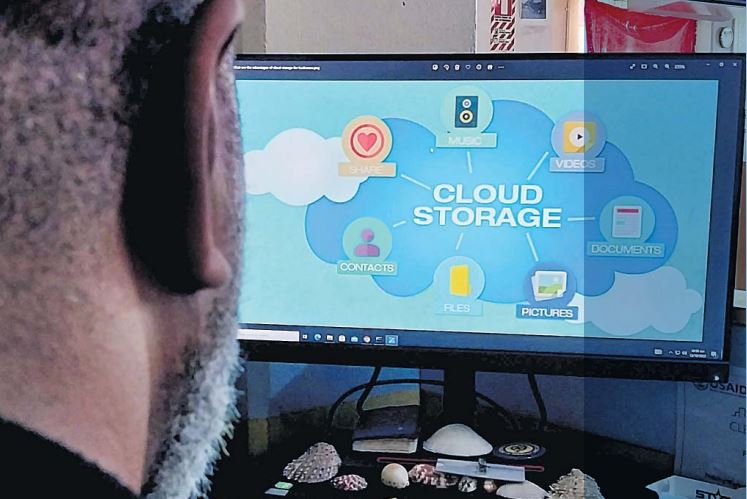
Cloud computing has become one of the fastest rising digital transformation trends over the past
few years. According to a McKinsey report, most companies will allocate 80 per cent of their IT budget
toward the cloud by 2024.
Here’s why mid-sized enterprises are adopting Cloud Computing:
• Cost savings as moving to the cloud can save money on hardware, software, and maintenance costs.
• Increased agility as the cloud offers a scalable, elastic infrastructure that allows enterprises to respond
to changes quickly.
• The cloud’s wide range of security features and services can help mid-sized enterprises protect their
data and applications.
• Cloud providers offer many cloud-based tools and services to help mid-sized enterprises innovate faster.
• Cloud computing can incur more costs than traditional on-premises IT infrastructure, which may stress
some SMEs financially.
Automation is another popular digital transformation trend propelled into popularity this year.
According to Salesforce, 95 per cent of IT and engineering leaders prioritise it to break silos, improve
customer experience, and enhance productivity.
Automation also increases employee satisfaction, as almost 90 per cent of workers are more satisfied with automation.
Here’s how automation helps them:
• Reducing manual labour and unnecessary expenses. Improving both employee productivity and organisational efficiency
• In short, automation offers ample opportunities for mid-sized businesses looking to become more productive. By spending less time on mundane tasks and focusing on things that matter, they can deliver value to customers.
Clearly, all the digital transformation predictions have one thing in common: change. Digitalisation is creating more opportunities than ever before, but at the same time, it requires a new mindset and readiness to embrace change. Governments, companies, and individuals need to accept the new reality of constant change to find a place in the developing digital world.
As some wiser person than I once commented – ‘Digital transformation is not about technology at all. It’s about people…’
Go Fiji Go! In your quarter-final game at the RWC 2023. As always God bless you all and your families
and stay safe in both digital and physical worlds.
ILAITIA B. TUISAWAU is a private cybersecurity consultant. The views expressed in this article are his and are not necessarily shared by this newspaper. Mr Tuisawau can be contacted on ilaitia@cyberbat

